LASIK and laser eye surgery: save up to 60% at the same quality
Glasses or contact lenses are part of everyday life for millions of people — but they are not always practical. In sport, at the swimming pool, when waking up in the morning or simply day to day, they can get in the way. The good news: modern laser eye procedures such as LASIK, Femto-LASIK or SMILE can correct refractive errors permanently. The better news: in Croatia and Slovenia patients get these treatments at 40–60% lower cost than in Austria and Germany — at the same quality and without long waiting times.
What are LASIK and laser eye surgery?
LASIK (Laser-Assisted In Situ Keratomileusis) is a surgical procedure to correct refractive errors such as short-sightedness (myopia), long-sightedness (hyperopia) and corneal curvature (astigmatism). The cornea of the eye is modelled with a laser so that the light falls correctly on the retina again and allows sharp vision.
The most common procedures:
- LASIK (standard):
- A thin corneal lamella (flap) is created with a microkeratome or a femtosecond laser.
- The corneal area beneath is ablated with an excimer laser.
- The flap is put back and heals on its own.
- Femto-LASIK:
- The flap is created with a femtosecond laser (more precise than with a microkeratome).
- The rest of the procedure is as with standard LASIK. It is considered safer and more precise.
- SMILE (Small Incision Lenticule Extraction):
- A femtosecond laser creates a small lens (lenticule) in the corneal tissue
- It is removed through a microscopically small incision (2–4 mm).
- No flap required, minimally invasive.
- Particularly suitable for short-sightedness and corneal curvature.
- PRK / LASEK (surface treatment):
- The topmost corneal layer (epithelium) is removed or lifted.
- The laser ablates the tissue beneath.
- No flap, but a longer healing time (3–7 days).
- Suitable for patients with a thin cornea.
Who is laser eye surgery suitable for?
Not everyone is a candidate for LASIK surgery.
The following criteria should be met:
- Age: at least 18 years (better 21+), as the prescription should have stabilised by then.
- A stable prescription: the refractive error should have stayed unchanged for the last 12–24 months.
- Healthy eyes: no corneal diseases (e.g. keratoconus), no serious eye conditions (e.g. glaucoma, retinal disease).
- Sufficient corneal thickness: at least 500 micrometres, so that there is enough tissue for the laser ablation.
- No pregnancy or breastfeeding: hormonal changes can affect the prescription.
- No autoimmune diseases: conditions such as rheumatism or diabetes can impair healing.
Ideally suited for:
- People with mild to moderate short-sightedness (up to -8 dioptres)
- Patients with long-sightedness (up to +4 dioptres)
- People with corneal curvature (up to 4 dioptres)
- Anyone who wants to live independently of glasses or contact lenses
Advantages of LASIK surgery
- A permanent correction: in most cases the improvement in vision lasts a lifetime. Only with age can reading glasses become necessary (presbyopia from about 45).
- Fast recovery: most patients can work and drive again the very next day. Full vision after 1–4 weeks.
- Painless: the procedure is carried out under local anaesthetic (eye drops). During the operation patients feel only slight pressure. After the operation there is mild burning or a foreign body sensation for 2–4 hours.
- A high success rate: more than 95% of patients reach a visual acuity of 100% or better. More than 99% can drive again (at least 70% visual acuity).
- No more glasses or contact lenses: freedom in everyday life, in sport, on holiday. No running costs for glasses, contact lenses or care products.
How LASIK surgery has developed in Germany and Austria
The development of LASIK surgery in Germany and Austria shows a clear upward trend:
- From the first pioneering procedures in the 1990s
- Through rapid growth in the 2000s
- To becoming a standard procedure with more than 100,000 operations a year in Germany and about 20,000–30,000 in Austria.
The combination of technological development, improved safety and rising demand makes LASIK one of the most successful medical procedures of the last 30 years.
The problem: high costs and long waiting times in Austria and Germany
- In Austria and Germany laser eye operations often involve considerable costs: €1,900–3,500 per eye for LASIK or Femto-LASIK, €2,400–3,500 per eye for SMILE.
- Long waiting times: often 3–6 months for a consultation appointment at specialist clinics.
- No cover: statutory health insurers generally do not cover the costs, as it is regarded as an aesthetic procedure.
- Additional costs: follow-up examinations, medication and any further treatment are often not included in the price.
Many patients therefore wait for years before they take the step — and miss out on the freedom of living without glasses or contact lenses.
The alternative: laser eye surgery in Croatia and Slovenia
More and more patients from Austria and Germany are choosing to have LASIK surgery abroad. Croatia and Slovenia offer decisive advantages:
A saving of 40–60%
Comparing prices shows clear differences:
Procedure: price in Germany/Austria (per eye) / price in Croatia (per eye)
LASEK / PRK €1,400 – 2,000 / €800 – 1,200
Femto-LASIK (standard) €1,900 – 2,500 / €1,000 – 1,500
Femto-LASIK (premium) €2,200 – 3,000 / €1,200 – 1,800
SMILE / ReLEx Smile €2,400 – 3,500 / €1,500 – 2,000
ICL (lens implantation) €2,800 – 3,500 / €2,000 – 2,500
Appointments at short notice
While patients in German-speaking countries often have to wait months, in Croatia and Slovenia they can often be operated on within 1–2 weeks. Many clinics offer flexible appointments and availability at short notice for consultation and surgery.
EU standards and safety
Croatia and Slovenia are EU member states subject to the same medical standards and regulations. Many clinics use state-of-the-art laser systems from brands such as Zeiss (VisuMax), Alcon (WaveLight) or Schwind Amaris — the same manufacturers used in Germany and Austria. The success rate is over 95% and complications are rare.
Modern technology
Leading eye clinics such as our partner Bilić Vision invest in the latest equipment:
- A Zeiss VisuMax femtosecond laser for precise incisions
- A WaveLight excimer laser with eye tracking for the highest precision
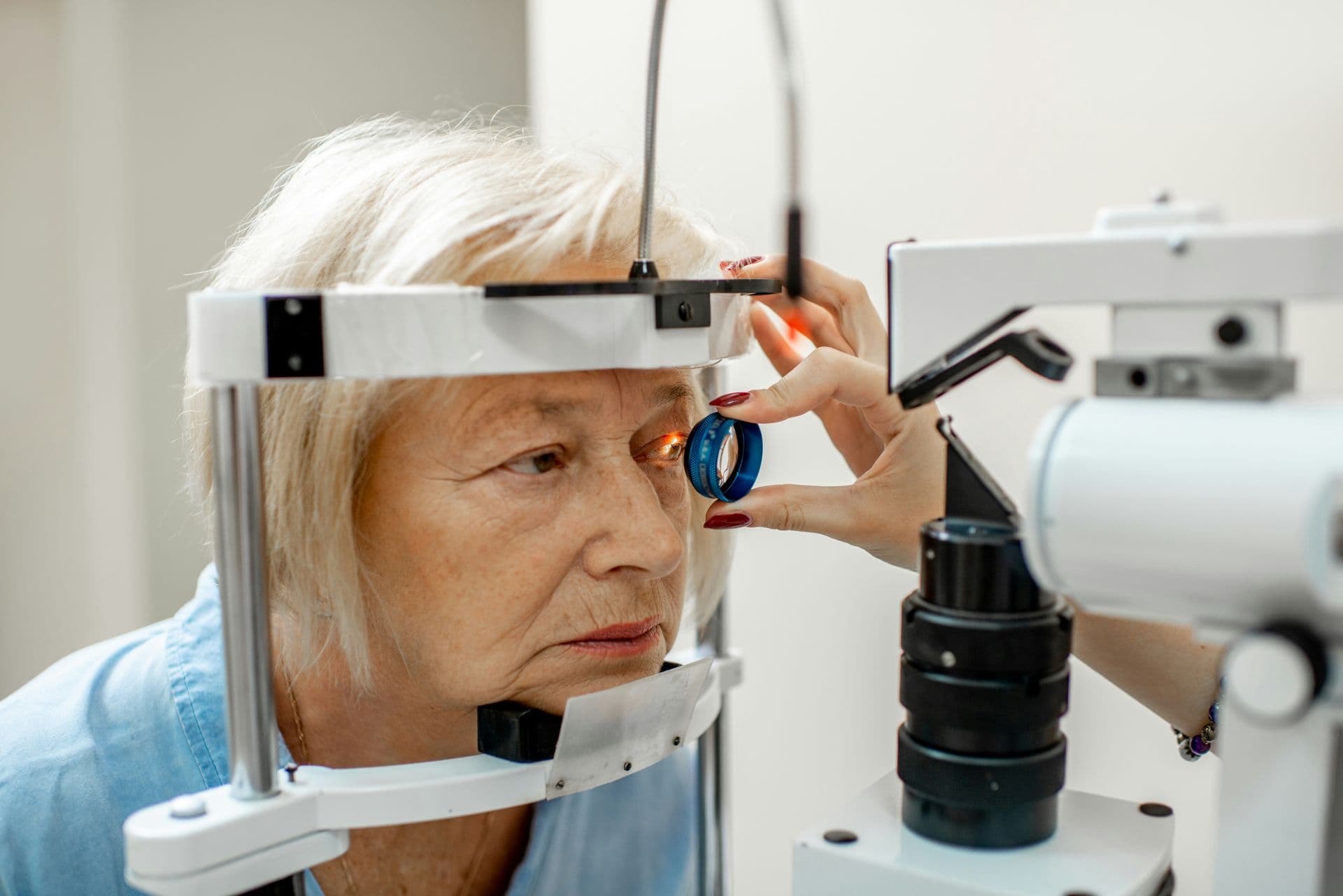
- OCT diagnostics for corneal analysis
- Topography-guided treatments for individual results
All-inclusive packages
- Many clinics offer comprehensive packages including:
- A free first consultation (also online)
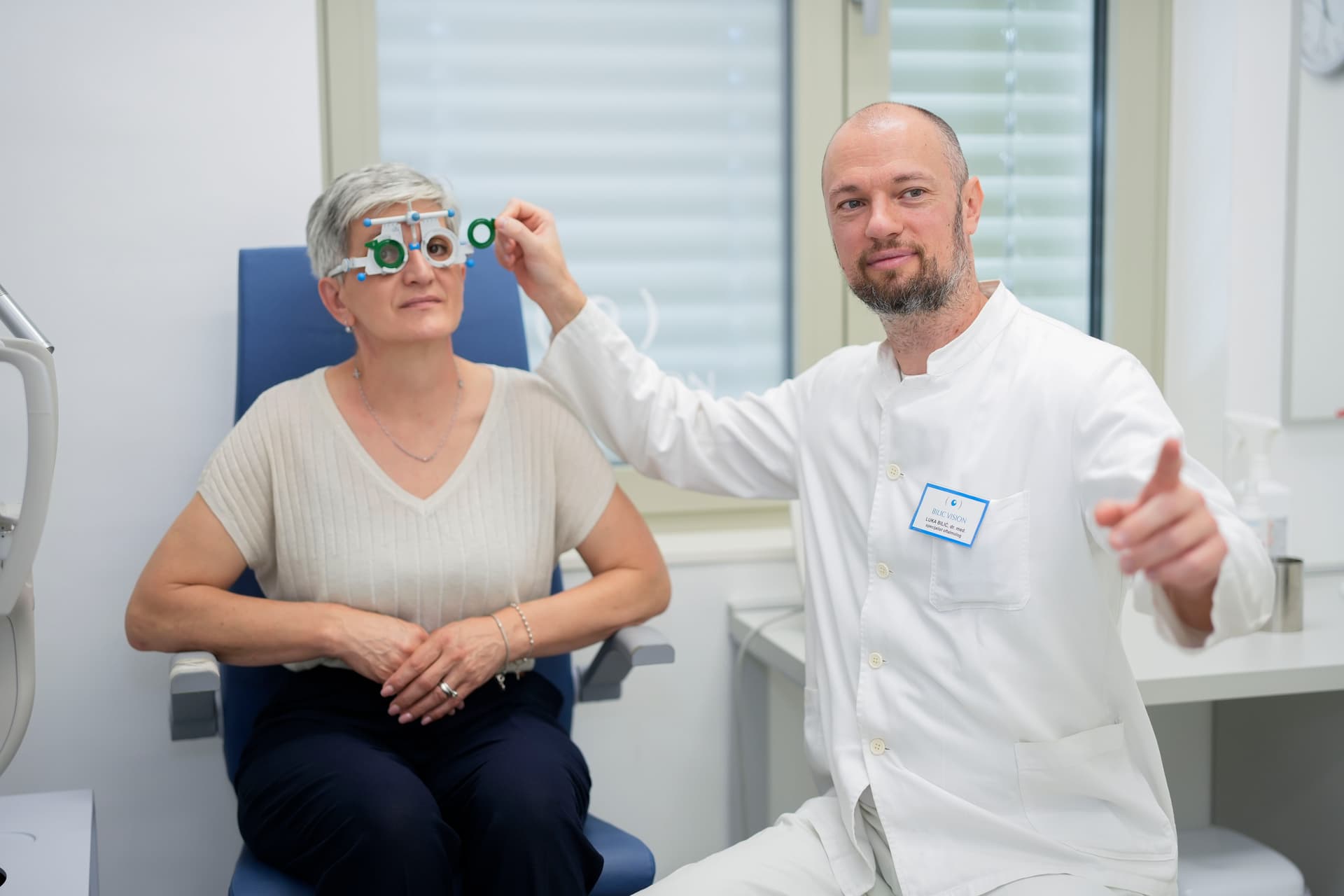
- A comprehensive preliminary examination (corneal topography, OCT, refraction)
- Organising flights and hotel
- Transfer from the airport to the clinic
- Accommodation during the treatment (2–4 days)
- Support in German
- Aftercare and check-ups (often in cooperation with ophthalmologists at home)
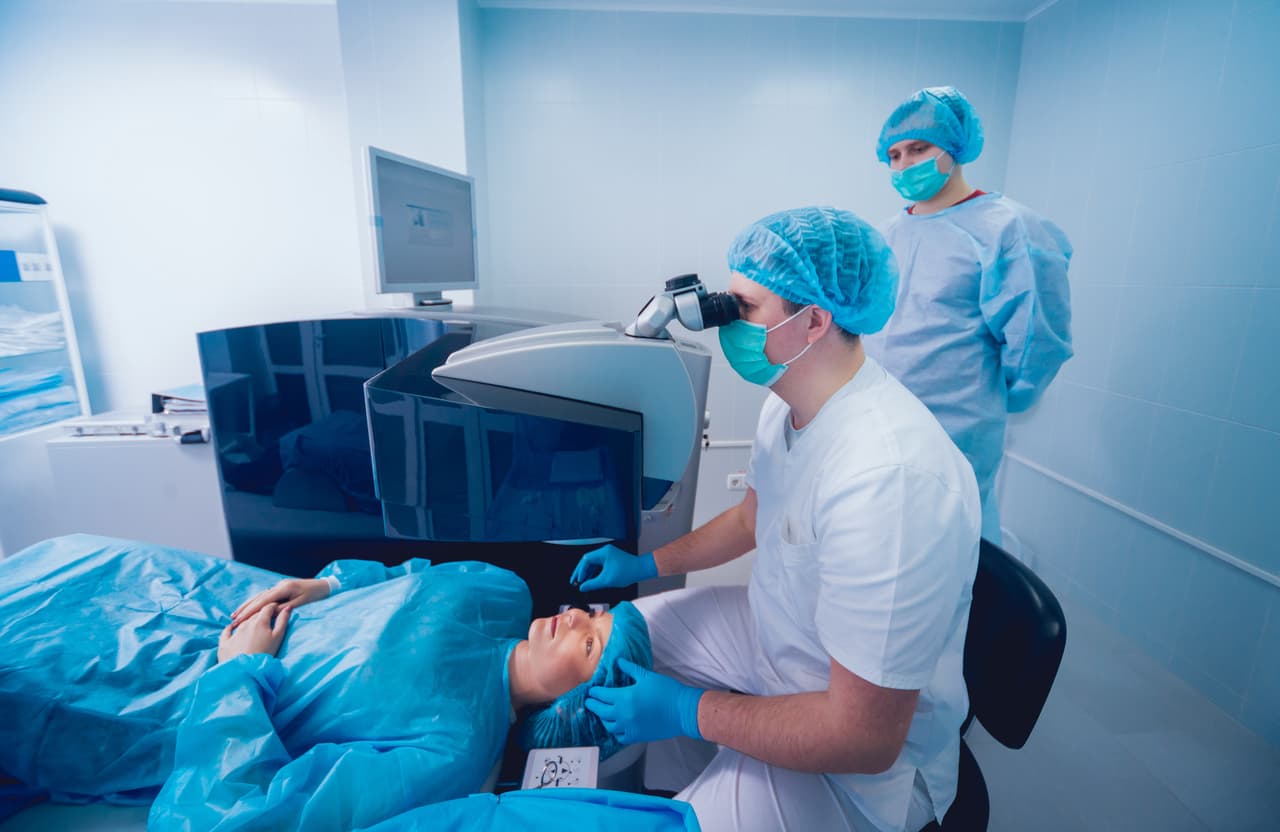
How does LASIK surgery proceed?
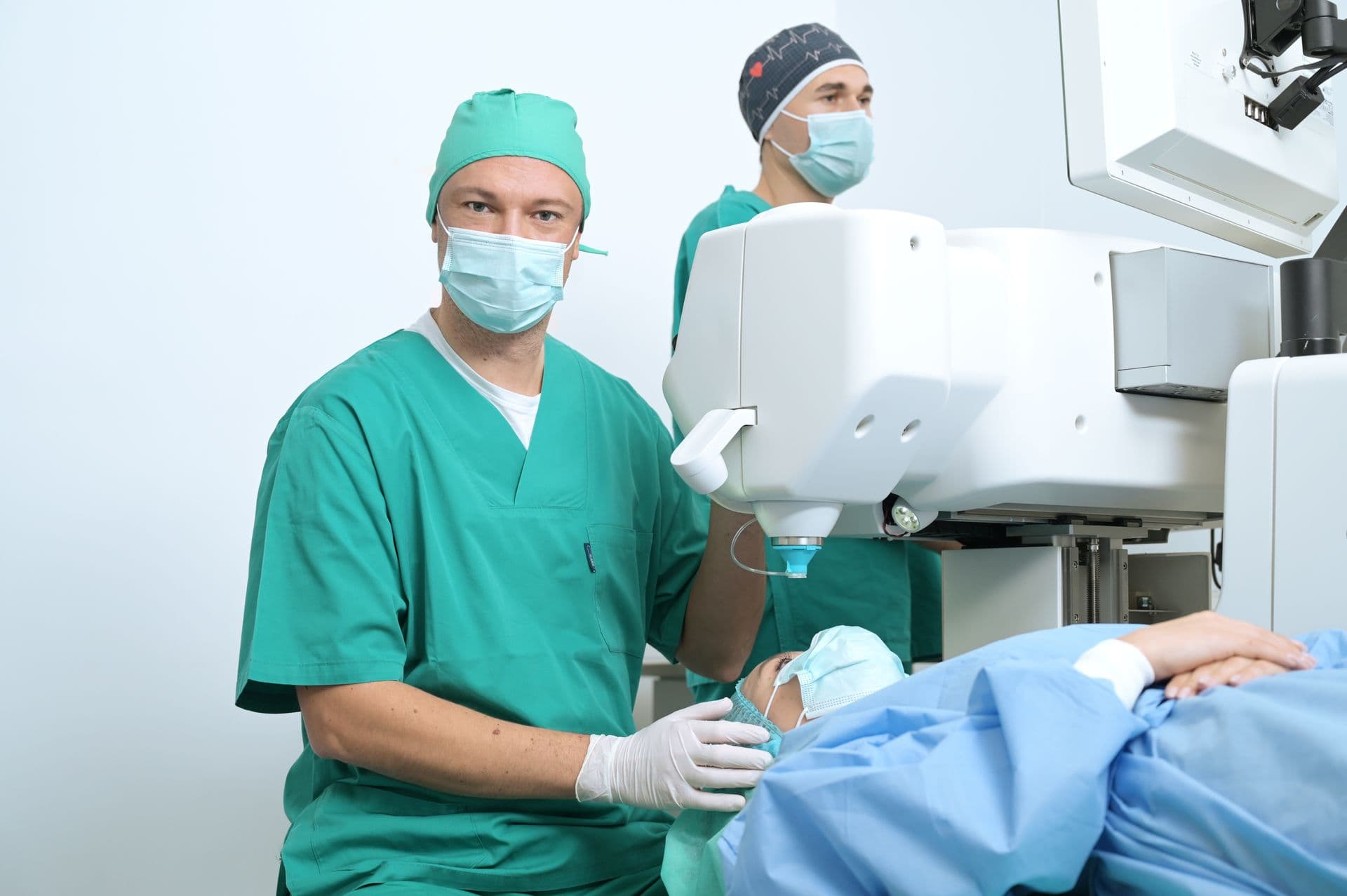
The procedure is carried out as day surgery and takes only 10–15 minutes per eye.
Step by step
- Preparation:
- A comprehensive eye examination (corneal topography, OCT, refraction, pupil size)
- Deciding on the suitable procedure
- Explanation and consent
- Surgery:
- Local anaesthetic with eye drops
- Creating the flap (with LASIK/Femto-LASIK) or the lenticule (with SMILE)
- Laser ablation of the corneal tissue
- Putting the flap back (with LASIK) or removing the lenticule (with SMILE)
- A check under the microscope
- After the operation:
- A short period of monitoring (1–2 hours)
- Eye drops are issued (antibiotics and tear substitutes)
- A follow-up examination the next day
How long does healing take?
Healing after LASIK surgery is generally quick and free of complications:
- Day 1: the first follow-up examination, the improvement in vision is already noticeable (often 70–80%)
- Days 2–3: most patients can work and drive again
- Week 1: vision improves to 90–95%
- Weeks 2–4: full stabilisation, 100% visual acuity reached
- Month 3: healing is fully complete
Important: in the first 2 weeks patients should avoid rubbing their eyes, swimming, make-up and strong sun exposure.
LASIK surgery is a safe, effective procedure with a short healing time and a high success rate. In Austria and Germany, however, patients suffer from long waiting times and high costs.
Croatia and Slovenia offer an attractive alternative: appointments at short notice (within 1–2 weeks), the latest technology, EU standards and savings of 40–60%. For patients who want to correct their refractive error and live independently of glasses or contact lenses, laser eye surgery abroad is a sensible option.
Are you interested in LASIK surgery? Then contact us today!
Interested in treatment?
Get a free consultation now