Cataract surgery abroad: why patients from Austria and Germany travel to Croatia and Slovenia
Cataracts are one of the most common eye conditions worldwide and affect millions of people. In Austria and Germany patients often wait months for surgery — while their sight gets steadily worse. The good news: cataract surgery is a safe, effective procedure with a short healing time. The better news: in Croatia and Slovenia patients get quick appointments, modern technology and costs that are 40–60% lower.
What is cataract surgery?
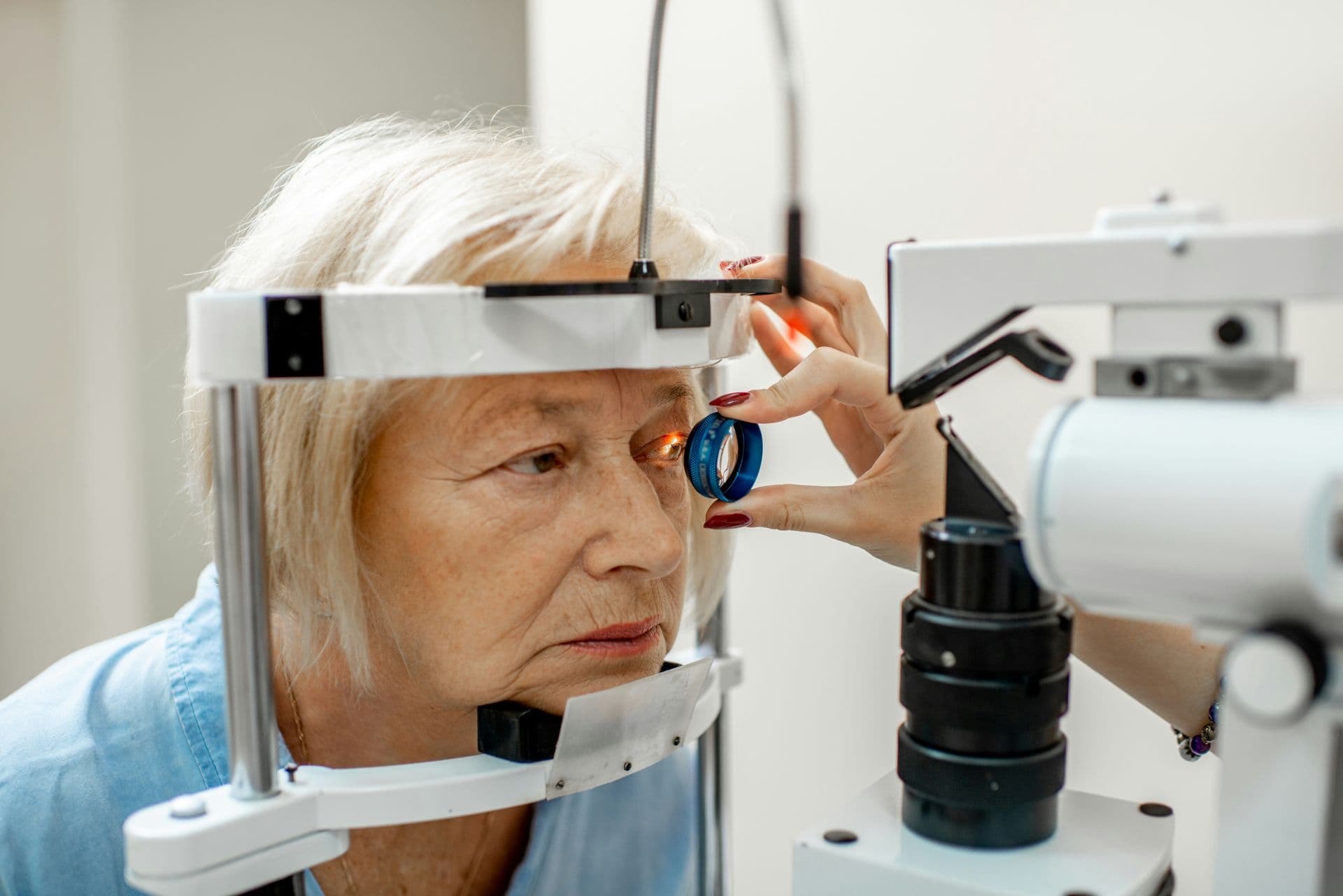
A cataract is the clouding of the eye's natural lens, which progresses with age and leads to blurred vision, sensitivity to glare and changes in colour perception. Cataract surgery is the only effective way to restore sight. During the operation the clouded lens is removed and replaced with an artificial intraocular lens (IOL). The procedure takes only 15–30 minutes, is usually carried out as an outpatient or day case and is painless thanks to a local anaesthetic.
How does cataract surgery work?
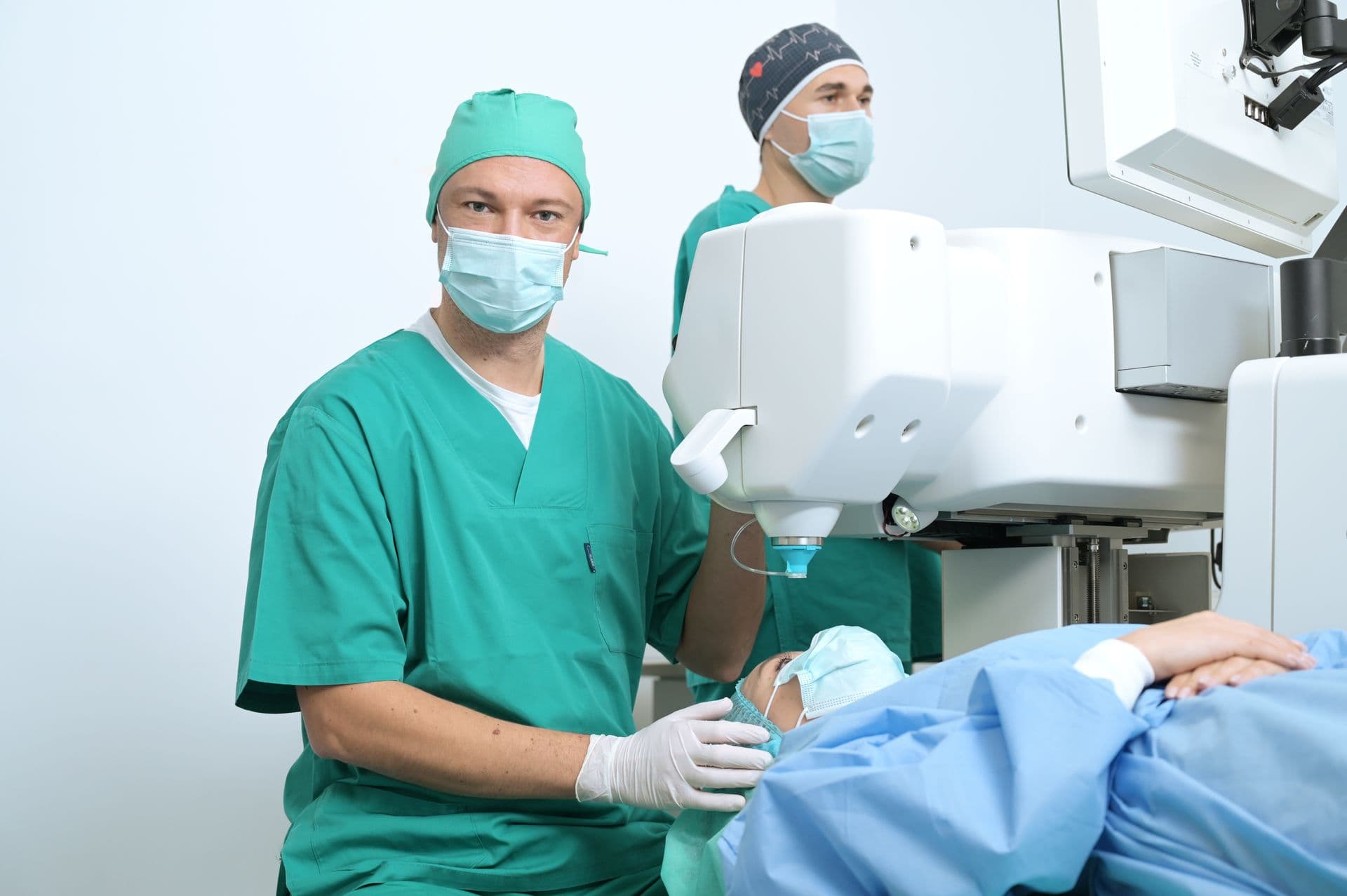
The modern standard is phacoemulsification, in which the clouded lens is liquefied with ultrasound waves and removed by suction. The new artificial lens is then inserted.
Step by step
- Preparation:
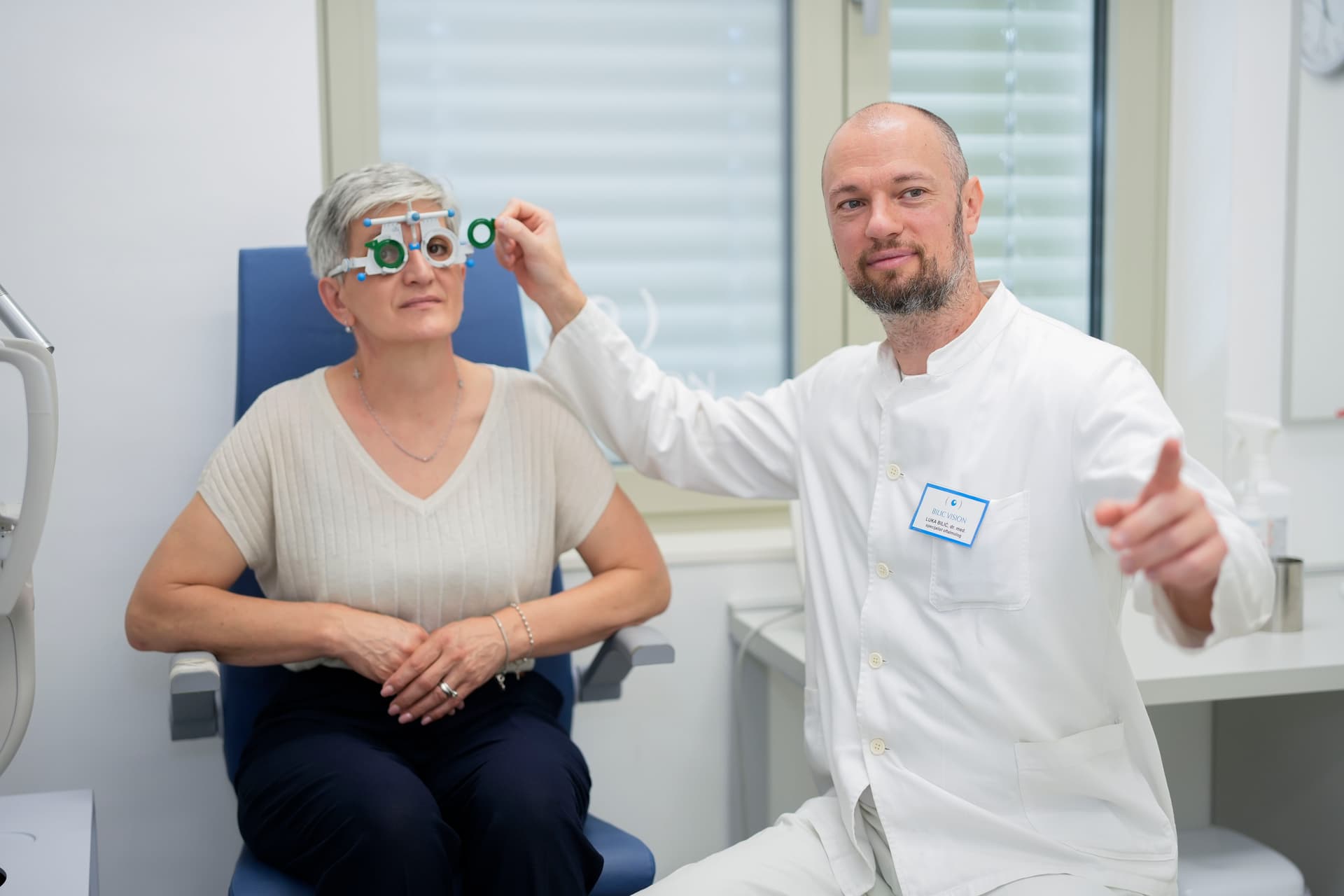
- A comprehensive eye examination (OCT, biometry, corneal measurement)
- Choosing the right intraocular lens (monofocal, multifocal, toric)
- Information and consent
- Surgery
- Local anaesthetic (drops or injection)
- A micro incision (2–3 mm) in the cornea
- Opening the lens capsule (capsulorhexis)
- Breaking up and removing the clouded lens (phacoemulsification)
- Inserting the new artificial lens
- A self-sealing incision (no sutures needed)
- After surgery:
- A short period of monitoring (1–2 hours)
- Eye drops are issued (antibiotics and anti-inflammatories)
- A follow-up examination the next day
How long does healing take?
Healing after cataract surgery is usually quick and free of complications:
Day 1: first follow-up examination, an improvement in vision is already noticeable
Days 2–7: vision improves continuously, slight sensitivity to glare is possible
Weeks 2–4: full stabilisation; most patients can work and drive normally again
Weeks 5–6: final healing; the glasses prescription can be adjusted
Important: for the first 2 weeks patients should avoid heavy physical strain, swimming and rubbing their eyes.
The problem: long waiting times, especially in Austria
In Austria the situation is particularly tight. Despite high demand and state-of-the-art medicine, patients often have to wait 6–12 months or longer for cataract surgery. There are several reasons:
- Overloaded public hospitals: too few operating theatres and staff
- Bureaucratic hurdles: lengthy approval procedures with the health insurer
- A shortage of specialists: too few specialised ophthalmologists in the public system
- Rising demand: cataracts are becoming more common as the population ages. A current example: the Hospital of the Brothers of Mercy in Vienna recorded around 7,800 cataract operations in 2024 — a record — yet the waiting lists remain long.
- On 6 September 2026 the Kleine Zeitung reported that 10,794 people in Styria are waiting for cataract surgery and that the waiting time is 45 weeks.

During the wait many patients face considerable limitations: they can no longer read, drive or pursue their hobbies. Quality of life drops dramatically and the risk of accidents rises.
The alternative: cataract surgery in Croatia and Slovenia
More and more patients from Austria and Germany are opting for cataract surgery abroad. Croatia and Slovenia offer decisive advantages:
- Quick appointments
While patients in German-speaking countries have to wait for months, in Croatia and Slovenia they can often be operated on within 1–2 weeks. Many clinics offer flexible appointments and short-notice availability.
- Modern technology
Leading eye clinics such as our partner Bilić Vision in Zagreb invest in state-of-the-art equipment: the Zeiss VisuMax femtosecond laser for precise incisions, OCT diagnostics for retinal analysis, ultrasound phacoemulsification and premium lenses from Alcon, Zeiss and Johnson & Johnson.
- A saving of 40–60%
A comparison of prices shows clear differences:
Country: Price per eye (standard lens) / price per eye (premium lens)
Germany €1,500 – 3,000 / €2,500 – 4,000
Austria €1,500 – 3,000 / €2,500 – 4,000
Croatia €800 – 1,500 / €1,800 – 2,800
Slovenia €1,000 – 1,800 / €2,000 – 3,000
- EU standards and safety
Croatia and Slovenia are EU member states subject to the same medical standards and regulations. Many surgeons hold international certifications and work with high-quality lenses from brands such as Alcon, Zeiss or Bausch + Lomb. The success rate is over 95% and complications are rare.
- All-inclusive packages
Some clinics offer comprehensive packages including:
- A free first consultation and 3D planning
- in part, organising flights and hotels
- sometimes: transfer from the airport to the clinic
- sometimes: accommodation during the treatment
- Support in German
- Aftercare and check-ups
Cataract surgery is a safe, effective procedure with a short healing time and a high success rate. In Austria and Germany, however, patients suffer from long waiting times that considerably limit their quality of life. Croatia and Slovenia offer an attractive alternative: quick appointments (within 1–2 weeks), modern technology, EU standards and savings of 40–60%. For patients who want to restore their sight quickly and safely, cataract surgery abroad is a sensible option.
Are you interested in cataract surgery? Then contact us today!
Interested in treatment?
Get a free consultation now