Dental implants — which products are used?
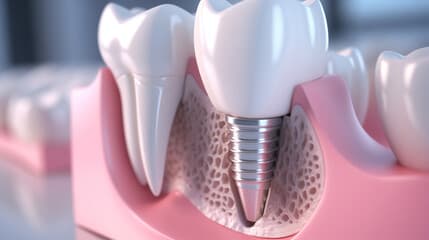
There are sometimes concerns that inferior material is used abroad. That is not the case at the clinics arranged by GO Medics. Our partner clinics work with the most renowned manufacturers in the world. In this article we explain what to look out for when choosing an implant.
Leading implant manufacturers worldwide
- Straumann (Switzerland) — considered the industry leader and known for innovative products and high-quality materials.
- Nobel Biocare (Switzerland) — known for the All-on-4 concept and a wide range of implant systems, high precision and durability.
- Dentsply Sirona (USA) — one of the largest suppliers in the world, focusing on durability and digital innovation.
- Zimmer Biomet (USA) — stands for precision engineering and clinical success in implantology.
- BioHorizons (USA) — specialised in biological surface technologies that promote faster healing and long-term success.
- Camlog (Germany) — known for precision, ease of use and innovative implant solutions.
Which implant materials are there?
The most important implant materials are titanium and ceramic (zirconia); other special materials such as bioglass are used more rarely. Every material has its own advantages and disadvantages in clinical use.
Titanium implants
Advantages:
- Very high strength and load capacity, ideal even where strong chewing forces are needed
- An extremely well-proven material with decades of long-term experience and many studies
- Excellent biocompatibility; the body almost always accepts titanium without problems, allergies are extremely rare
- Very good osseointegration, meaning the implant fuses optimally with the jawbone
Disadvantages:
- A metallic appearance; with thin gums titanium can shine through
- Metal intolerances are very rare but possible
- Some patients want completely metal-free solutions
Ceramic implants (zirconia)
Advantages:
- Aesthetically advantageous, as the light, tooth-like colour does not shine through — especially in the front teeth
- Completely metal-free: very suitable for allergy sufferers and patients with chronic inflammation or metal intolerances
- The surface offers hardly any breeding ground for bacteria, so there is a lower risk of inflammation (peri-implantitis)
- Very good biocompatibility
Disadvantages:
- Somewhat higher costs than titanium
- Less long-term experience and fewer studies on durability than with titanium
- Lower fracture resistance under extreme loads, especially with one-piece implants
- A longer healing time compared with titanium
Other materials
- Titanium alloy: even more robust variants of titanium with similar advantages and disadvantages, but occasionally slight differences in tolerance
- Bioglass/special alloys: used in special cases such as regenerative procedures, rarely in standard therapy
What do implants cost?
Titanium implants are on average cheaper than ceramic implants. The price difference comes from the higher material, production and treatment costs of ceramic implants.
The cost of titanium implants
- On average in Austria: €1,800–3,200
- Offers at our dental clinics in Croatia start at about €500 (without a crown) to €1,600 (with a crown)
- Titanium is cheaper in terms of material, manufacture and processing
The cost of ceramic implants
- Typical range in Austria/Germany: €2,500–4,000 per implant
- Special cases (front teeth, bridges): up to €4,750 possible
- In other words: the difference between a titanium and a ceramic implant is usually €500–1,500 per implant
- But: the costs at our dental clinics in Croatia are at least 50% below those in Austria, Germany or Switzerland
Cost differences between standard and premium implant manufacturers
The cost difference between standard and premium implant manufacturers can be considerable, depending on the brand and the country. Premium manufacturers such as Straumann, Nobel Biocare or Dentsply Sirona usually charge considerably more than cheaper standard manufacturers such as Alpha-Bio or MegaGen. Find out in advance which implant manufacturers the dental clinic uses!
Reasons for the extra cost of premium systems:
- Higher spending on research and innovation in premium implants.
- Better documented long-term results and extensive test data.
- More choice of connecting elements and special solutions, often with the option of digital planning and premium service from the manufacturer.
For a simple replacement a standard implant is often perfectly sufficient; in complex cases, with high aesthetic demands or complicated starting situations, the extra investment in a premium product can make sense. It therefore depends on the individual case and no blanket judgement can be made about which brand is right for you.
What about the guarantees on implants?
Guarantees and replacement terms differ considerably between manufacturers and implant types. Premium manufacturers often offer more generous and longer-lasting guarantees than cheaper standard suppliers.
- Premium manufacturers (e.g. Straumann, Nobel Biocare):
- usually offer a lifetime guarantee on the implant itself.
- Replacement not only of the implant but often also of prosthetic components (abutments, bridges) if the product fails.
- In some cases insurance solutions are included that also cover the cost of new treatment or bone graft material.
- Conditions: proof of regular follow-up check-ups, restrictions where the patient is at fault (e.g. poor oral hygiene).
- Standard manufacturers (e.g. Alpha-Bio):
- Shorter guarantee periods of 3–5 years or, depending on the implant type and series, a lifetime guarantee as well.
- Replacement usually applies only to the implant itself, not always to components such as abutments or superstructures.
- Depending on the manufacturer, the guarantee can be tied to stricter conditions, e.g. regular maintenance at the dentist.
Important differences
- Premium manufacturers often cover the immediate restoration and the whole implant treatment with more generous replacement terms (e.g. a free replacement implant and prosthetics under guarantee).
- Standard manufacturers usually limit the scope more strictly to the implant product and less to follow-up costs.
- In practice, the lifetime guarantee from premium manufacturers usually applies to material and manufacturing faults, but not to consequential damage from incorrect loading, accidents or inadequate care.
One thing is certain:
We at GO Medics advise you on the right clinic for you and the materials used — and ultimately help you save money. Don't hesitate: find out today about your dental trip to Croatia!
Interested in treatment?
Get a free consultation now