Dental implant healing time: Phases of osseointegration at a glance
Dental implant healing time is individual and is usually measured in months. Here you will learn what phases there are and what can influence osseointegration.
Dental implant healing time usually takes several months, as the implant must first firmly fuse with the jawbone. How long this takes in an individual case depends on several factors; your dentist will inform you individually after the examination.
This article explains the individual phases from implantation to restoration with dental work. It does not replace a medical consultation and does not provide medical advice.
What happens in the jawbone during healing
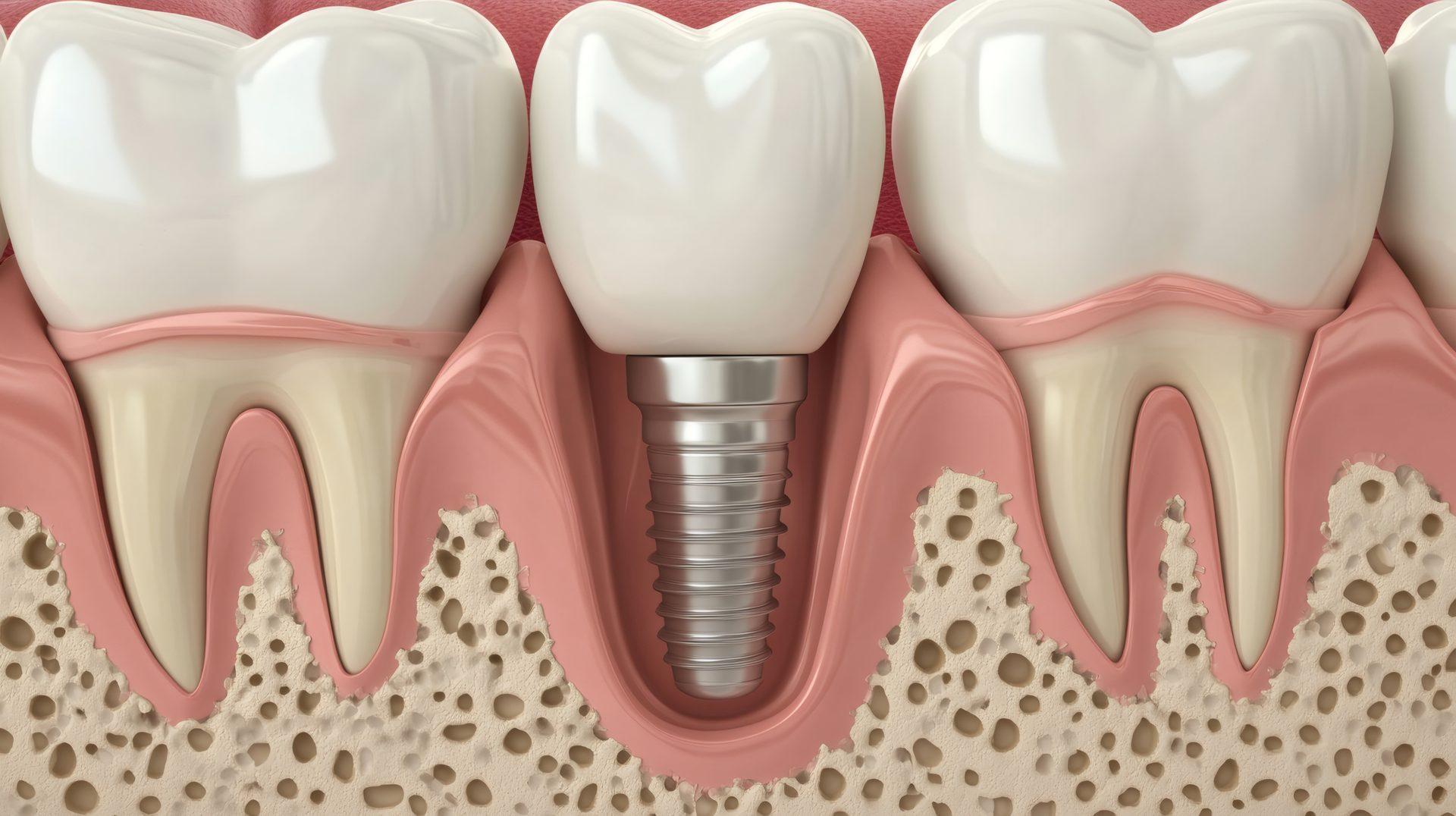
A dental implant is an artificial tooth root, usually made of titanium or ceramic. After insertion, it should fuse with the bone. This process is called osseointegration. Only when the implant has sufficient hold in the bone can it normally be loaded with a crown, bridge or denture.
You can find out which materials are used in the article Dental implants – Which products are used?. A general overview is provided on the page about Dental implants.
The phases of dental implant healing at a glance
The procedure can vary depending on the clinic and initial situation. These phases are often distinguished:
1. Pre-examination and planning
Before the procedure, your dentist examines the condition of your teeth, gums and jawbone, often with X-rays or 3D images. Based on this, they will decide whether an implant is suitable for you. If necessary, any inflammation must be treated beforehand, for example as part of periodontics.
2. Implantation
The implant is inserted into the jawbone in a small surgical procedure. This is usually performed under local anesthesia; the clinic will discuss the details with you. Depending on the situation, the implant is either covered with stitched gums or receives a visible abutment.
3. Healing phase
Over the following weeks to months, the implant fuses with the bone. The healing time for an implant is usually around three to six months. With additional bone grafting or difficult initial conditions, it can take longer. The clinic will inform you individually.
4. Uncovering and impression
If the implant was sealed under the gum, it will be uncovered after healing. An abutment is then attached and an impression or digital scan is taken for the dental restoration.
5. Restoration with dental work
Finally, the crown, bridge or denture is made and attached. You can find more information under Dental crowns & bridges. Some concepts provide for earlier loading; your dentist will decide whether this is possible for you.
What can influence healing time
The duration is not the same for all patients. Factors that can have an influence include:
- The amount and quality of existing bone
- The location in the jaw (upper and lower jaw differ in bone structure)
- Smoking, which can impair wound healing
- Certain diseases, such as diabetes or periodontitis
- Medications that affect bone metabolism
- Oral hygiene before and after the procedure
- An additional procedure such as bone grafting
Only your treating dentist can assess whether and to what extent such factors play a role for you.
Aftercare following implant placement
Careful implant aftercare supports healing. Typical measures include:
- Follow-up appointments in the days and weeks following the procedure
- Guidance on gentle oral hygiene in the wound area
- Avoiding smoking, as recommended by the clinic
- Soft diet in the initial period, if the clinic recommends this
- Regular check-ups and professional cleaning after the restoration
If you have treatment abroad, you should clarify early on who will perform the follow-up examinations at your home location and how to proceed if problems arise.
Risks, side effects and limitations
Any surgical procedure carries risks. Following implant placement, the following may occur, among other things:
- Swelling, bruising and pain in the surgical area
- Post-operative bleeding and impaired wound healing
- Infections or inflammation of the tissue around the implant (peri-implantitis)
- Injuries to adjacent structures such as nerves, neighbouring teeth or the maxillary sinus
- Numbness or tingling sensations
- An implant that does not integrate sufficiently and must be removed
An implant is not suitable for everyone. Whether it is an option is determined by your doctor following an examination. Even after successful integration, regular check-ups and good oral hygiene remain important, as the tissue around an implant can become inflamed. It is not possible to make a statement about durability in individual cases.
What you should clarify with the clinic
You can ask the following questions during your medical consultation:
- What healing time should I typically expect in my case?
- Is bone augmentation necessary, and how does it extend the process?
- How many appointments are needed on-site, and at what intervals?
- Which implant system and materials are used?
- What risks exist in my situation, for example due to pre-existing conditions or smoking?
- What does aftercare involve, and what applies if complications arise after you return home?
- What check-ups should I have performed at home by my dentist?
- What does the written cost plan include, and how are follow-up costs handled?
The clinic determines costs following the examination in a written cost plan. For further information on planning treatment in Croatia, see the article Dental treatment in Croatia: What to consider regarding planning and costs.
How GO Medics provides organisational support
GO Medics establishes contact with partner clinics in Croatia, for example in Zagreb, Split, Poreč or Zadar, helps coordinate appointments and compile your documentation. Medical consultation, diagnosis, cost plan and treatment are provided exclusively by the clinic. GO Medics does not provide medical recommendations. You arrange travel and accommodation yourself or through the clinic. For more information on this area of treatment, see Dental treatments.
Frequently asked questions
How long does dental implant integration take?
As a rule, integration takes several months, often around three to six. With additional bone augmentation or special circumstances, it may take longer. The clinic will provide you with individual information following the examination.
What is osseointegration?
Osseointegration refers to the implant fusing with the jaw bone. Only once the implant is sufficiently secure in the bone can it generally be loaded with dental restoration.
What can delay implant healing?
Smoking, gum inflammation, certain pre-existing conditions and bone quality can all have an influence. Inadequate oral hygiene can also impair healing. Your doctor will assess what is relevant in your case.
Do I need to travel to the clinic multiple times during healing?
This depends on the treatment plan. Usually at least one appointment for implant placement and another for fitting the dental replacement are necessary. Clarify the procedure and check-ups at your home location in advance with the clinic.
Note: This post is for general information purposes and does not replace medical consultation. Whether a treatment is suitable for you will be decided by your treating doctor after an examination. GO Medics handles organisational tasks and does not provide medical recommendations.
Interested in treatment?
Send an enquiry