Veneers abroad: costs, materials and the path to a new smile
A beautiful smile can noticeably influence how you feel and how you come across. Veneers offer the possibility of changing the shape, colour and small misalignments of the visible front teeth. They are not, however, an automatic solution for every aesthetic dental problem. Before treatment, caries, gum disease, misalignment, tooth substance and teeth grinding have to be carefully clarified. For patients from Germany, Austria and Switzerland, Croatia and Slovenia can be interesting destinations for aesthetic dental treatment. The cost of veneers is often below prices in German-speaking countries, but should always be considered together with the quality of the material, the planning, the dental laboratory, aftercare and possible travel costs.
What are veneers?
Veneers are thin shells fixed to the visible front of a tooth. They can correct small differences in shape, visible discolouration, slight gaps or chipped edges. Veneers are usually placed on the front teeth, because that is where the aesthetic effect matters most.
Veneers do not normally cover the whole tooth as a crown does. A crown may be necessary where a tooth is badly destroyed, root-treated or structurally weakened. With a healthy, stable front tooth, on the other hand, it should be checked whether a veneer, direct composite bonding, bleaching or orthodontic treatment is the gentler solution.
Ceramic or composite veneers?
Ceramic veneers
Ceramic veneers are made individually in a dental laboratory and then bonded to the tooth. They give a very natural play of light and are relatively resistant to discolouration. Materials often used are feldspathic ceramic, lithium disilicate or E-max and other modern dental ceramics.
Advantages of ceramic veneers:
- A very natural look
- Individual adjustment of shape and colour
- Good colour stability
- A smooth surface
- High aesthetic quality when planned correctly
- Often a long life with good care
Disadvantages can be the higher price, the need for laboratory production and at least minimal preparation. Ceramic veneers are not indestructible either. Heavy grinding, hard objects or an unfavourable bite can lead to fractures or the veneer coming loose.
Composite veneers
Composite veneers are built up directly on the tooth from a tooth-coloured resin material. They can often be made in one session and are usually cheaper than ceramic veneers.
Advantages:
- Lower costs
- The treatment is often possible in one session
- Often less invasive preparation
- Repairs can be carried out directly on the tooth
- Suitable for smaller corrections of shape
Disadvantages:
- Composite can discolour over time
- The surface can become rougher
- Durability is often lower than with high-quality ceramic veneers
- The material can chip under heavy load
For the decision, more than just the price per tooth should be compared. The extent of the correction, the bite, the desired durability and the willingness to accept later repairs or replacement matter too.
When are veneers suitable?
Veneers can be a suitable treatment where the teeth are basically healthy and stable and mainly aesthetic changes are wanted.
Typical reasons are:
- Stubborn internal discolouration
- Small gaps between teeth
- Slightly irregular tooth shapes
- Chipped incisal edges
- Front teeth that are too short or uneven
- Old visible fillings
- Slight differences in shape or size
- A wish for a more harmonious tooth colour
Veneers are not, however, automatically the right solution. With severe misalignment, orthodontic treatment can make more sense. With badly damaged teeth a crown can offer more stability. With pure discolouration, professional bleaching may already be enough.
Healthy teeth and healthy gums as a precondition
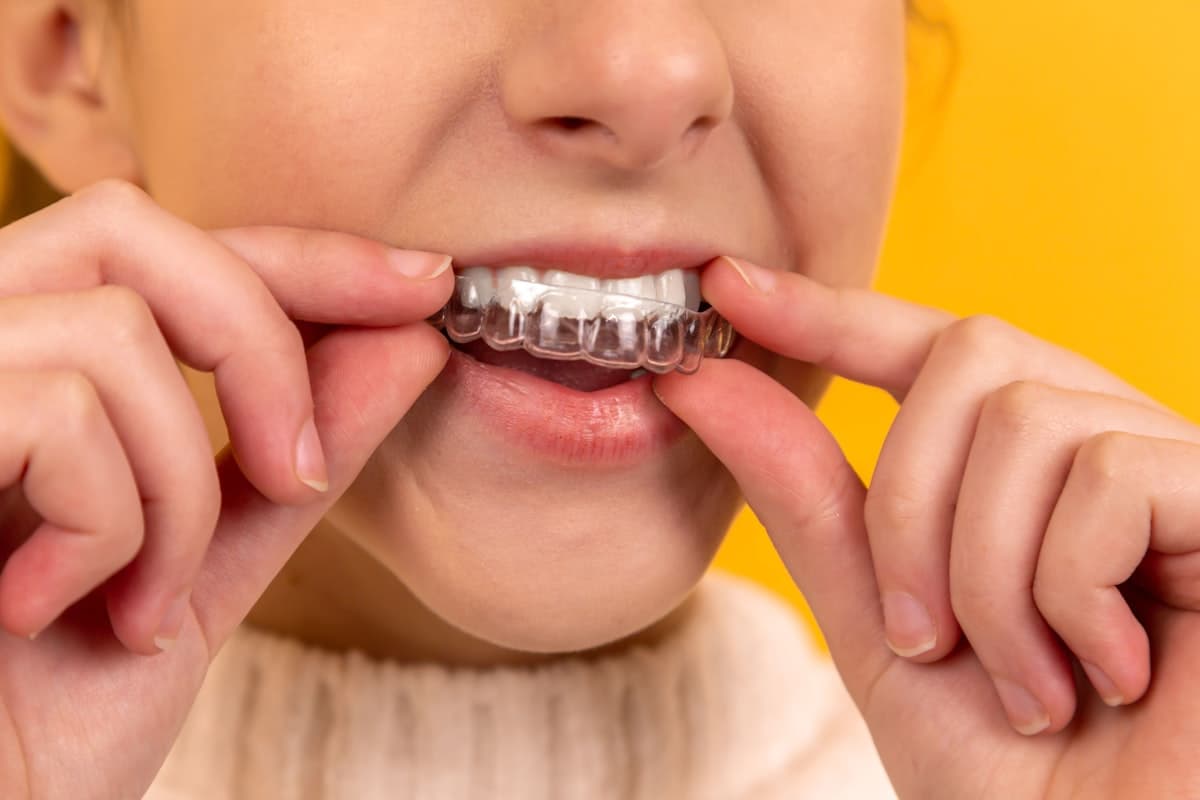
Before veneer treatment the teeth and gums have to be examined thoroughly. Active caries, leaking fillings or inflammation must not simply be covered up with veneers. Under a shell, disease can develop further and be harder to detect later.
Gum diseases such as gingivitis or periodontitis should also be treated and stabilised first. Inflamed or bleeding gums make the exact shaping of the margins more difficult and can impair the aesthetic result. A healthy gum line is particularly decisive in the front teeth.
Before planning, the following points should also be clarified:
- Caries and old leaking fillings
- Bleeding gums and gum pockets
- The condition of the tooth roots
- Tooth sensitivity
- The bite and the jaw joint
- Teeth grinding and clenching
- Sufficient enamel. Changes in colour and internal discolouration
Patients with active bruxism should not be given veneers without further measures. An individually made bite splint can be necessary to protect the new shells.
Preparation that spares the tooth
With a classic veneer treatment a small amount of enamel is often removed so that the shell can be fixed to the tooth stably and naturally. How much preparation is needed depends on the position of the tooth, the desired shape, the existing tooth colour and the material.
The aim should be preparation that spares the tooth as far as possible. A reputable clinic should be able to explain to you:
- How much tooth substance will probably be removed
- Whether a no-prep or minimal-prep solution is possible
- Whether the planned shape would look too thick without preparation
- Which areas of the tooth will be treated
- Whether the treatment is permanent and reversible
“No-prep” does not automatically mean that the treatment is suitable for every patient. Where a tooth protrudes strongly or is to be widened considerably, veneers without preparation can look unnaturally thick.
Conversely, preparation that is too aggressive can lead to sensitivity, damage to the pulp or greater dependence on later restorations. In the specialist literature, insufficient enamel, deep margins, active caries and severe bruxism are named among the important contraindications or risk factors .
Smile design and digital planning
A modern veneer treatment should not be planned on the basis of a short conversation and a photo alone. In a so-called smile design, the face, lips, tooth shape, tooth position, gum line and desired tooth colour are considered together.
Digital planning tools can help to make the desired change visible. Depending on the clinic, intraoral scanners, digital photos, video recordings, 3D models or CAD/CAM processes are used. Digital planning can improve communication between patient, dentist and dental laboratory.
It does not, however, replace the clinical examination. A computer simulation shows a possible aesthetic direction but does not guarantee the final result. The final shape has to harmonise with the bite, speech, lip movement and gums.
Before the final production, a wax-up, a mock-up or temporary test teeth can be useful. That way the patient can check whether the length, width, colour and visibility of the teeth are pleasing when speaking and laughing.
Choosing the colour and a natural result
A particularly bright smile is not automatically a natural smile. The tooth colour should suit the skin type, age, face, lips and the remaining teeth. With several veneers a lighter colour can be chosen than was originally there. Even so, the colour should be designed individually.
Important criteria are:
- Brightness
- Hue
- Transparency
- Surface texture
- Tooth length
- Tooth shape
- Symmetry
- The relationship between teeth and gums
Veneers that are too uniform and extremely white can look artificial. Natural teeth show slight differences in colour and structure. An experienced dental laboratory can reproduce these details through layering, surface texture and individual characterisation.
How many sessions are necessary?
The number of appointments depends on the material and the extent of the treatment.
Ceramic veneers
With ceramic veneers several steps are often needed:
- Examination and consultation
- Photos, a scan or an impression
- Planning and, if appropriate, a mock-up
- Preparation that spares the tooth
- Temporary restoration
- Try-in of the finished veneers
- Correction and final fitting
- A follow-up check
With extensive work, two stays in Croatia or Slovenia can make sense. At the first appointment, planning, preparation and temporaries are carried out. After the laboratory phase, the second appointment follows for the try-in and final fixing.
Composite veneers
Composite veneers can often be made in one session. With several teeth or a more complex correction of shape, however, additional check-up appointments make sense. With composite too, the bite should be checked carefully and the result reviewed again after a few days.

The cost of veneers abroad
The costs differ according to material, clinic, laboratory, the number of veneers and the extent of the treatment. For Croatia you can assume a guide value of about €2,500 for eight veneers. The average price per ceramic veneer is about €300–700 per tooth. These figures are only guide prices and can vary with the clinic, the material and the planning.
Additional costs can arise for:
- The first examination and X-rays
- Professional tooth cleaning
- Treatment of caries or gums
- A mock-up and digital planning
- Temporaries
- An impression or intraoral scan
- The try-in and follow-up check
- possibly also transfers and accommodation
- Repairs or later adjustments
After the first examination our patients receive a cost estimate. It sets out precisely the number of veneers, the material, the laboratory, the temporaries, the check-up appointments and any additional services.
Risks of treatment that is too aggressive
With careful indication and correct fixing, veneers can be a good aesthetic solution. Risks arise above all where healthy teeth are ground down unnecessarily or the bite is not taken into account.
Possible problems are:
- Increased tooth sensitivity
- Irritation or damage to the tooth nerve
- Veneers coming loose
- Fracture or chipping
- Caries at the margin
- Receding gums
- An unsuitable colour or shape
- Changes in speech
- Difficulties with biting
- The need for a crown later on
Particularly critical are treatments in which very many teeth are prepared without sufficient medical justification. Patients should be careful where they are offered a “Hollywood smile” without caries, gums, bite and dental health being examined first.
Care and durability
Veneers need the same careful care as natural teeth. Brushing twice a day, dental floss or interdental brushes and regular professional cleaning help to keep the margins clean.
In addition patients should:
- Not bite on hard objects
- Not use their teeth on nails or pens
- Wear a protective splint if they have bruxism
- Attend regular check-ups
- Contact the clinic early if veneers become loose or rough
- Consume strongly staining drinks only in moderation
- Follow the instructions of the treating clinic
Durability depends on the material, planning, bite, care and load. Under good conditions ceramic veneers can last many years; composite veneers need polishing, repair or replacement more often. No reputable clinic can promise a fixed guarantee of durability for every patient.
What to clarify before treatment abroad
Before treatment, patients should in any case clarify the following points:
- Are my teeth and gums suitable for veneers?
- What alternatives are there?
- How much enamel will be removed?
- Which ceramic or composite material is used?
- Which dental laboratory makes the veneers?
- Is a digital scan or a classic impression taken?
- Is there a mock-up or a digital preview?
- How many teeth are to be treated?
- How many appointments and stays are needed? Are temporaries and follow-up checks included in the price?
- What guarantee or repair conditions apply?
- Who can be reached after returning home?
Conclusion
Veneers can improve the shape, colour and proportions of the front teeth harmoniously. They are not, however, a standard solution for every smile. Before treatment, caries, gum disease, misalignment, insufficient enamel and teeth grinding have to be carefully clarified.
Croatia and Slovenia offer patients from Germany, Austria and Switzerland interesting options for ceramic and composite veneers. Price should never, however, be the only criterion for the decision. Preparation that spares the tooth, precise digital planning, a qualified dental laboratory, natural colour design and clear aftercare are decisive for a good long-term result.
GO Medics supports you in choosing a suitable partner clinic, sending your documents, arranging appointments and organising your veneer treatment in Croatia or Slovenia.
Would you like more information about veneers? Then contact us today!
Interested in treatment?
Get a free consultation now