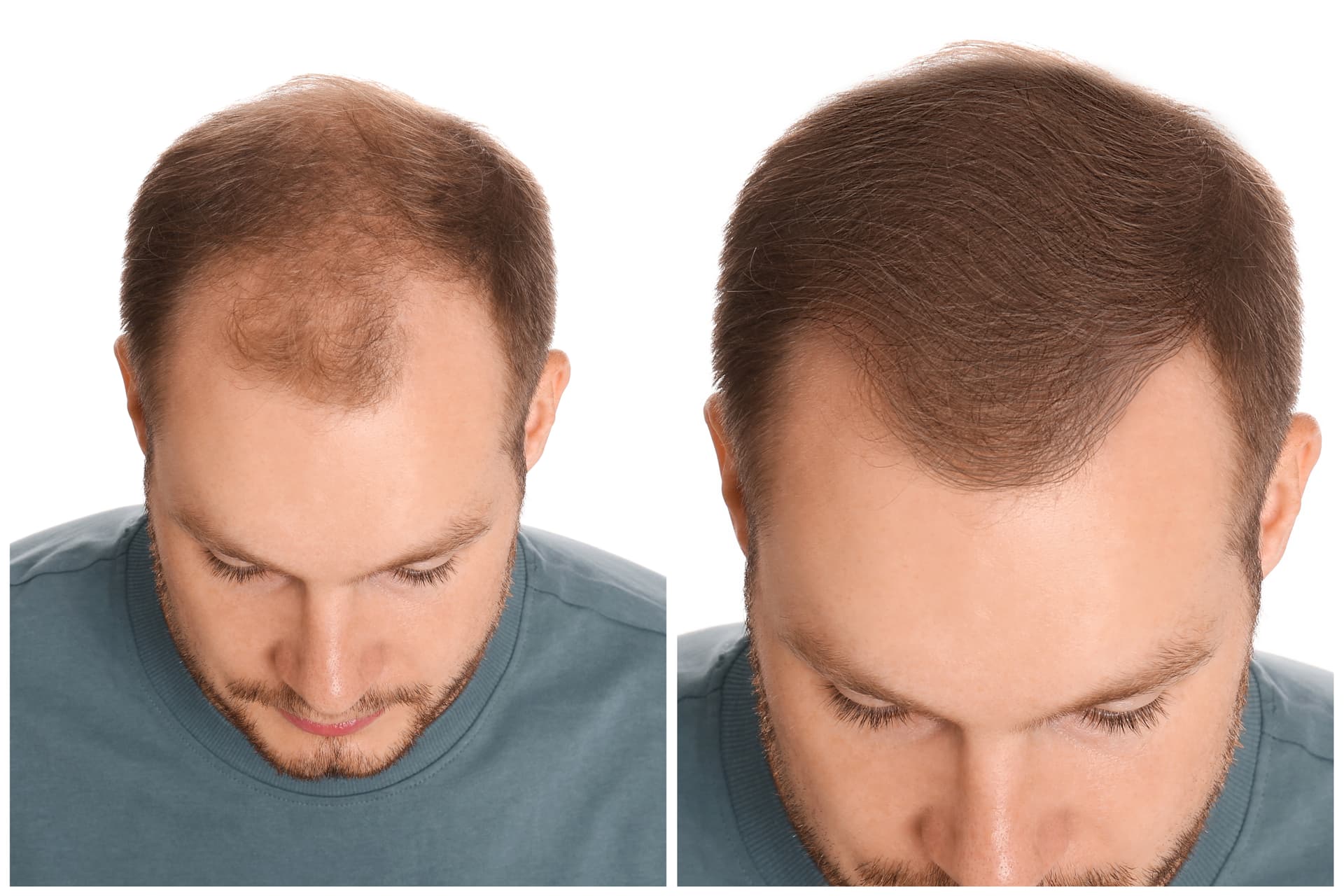
Hair transplant with PRP: how plasma treatments improve the results
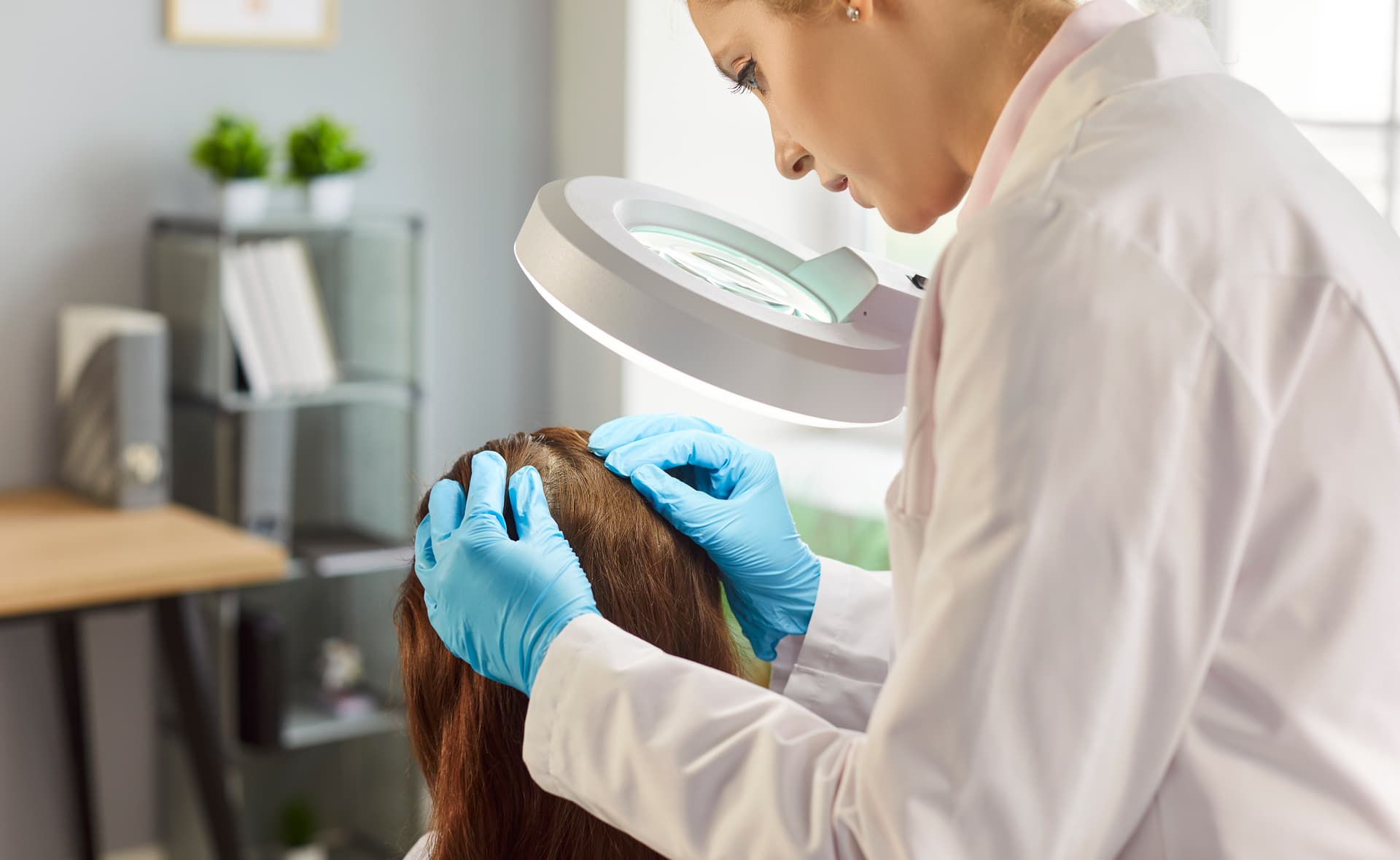
PRP stands for "platelet-rich plasma". The treatment uses components of your own blood to support healing and possibly also hair growth. PRP can be a complementary option especially for patients who want to create the best possible conditions for a good result after a hair transplant. Important, however: PRP does not replace a careful diagnosis, good surgical planning or a professionally performed hair transplant. The scientific results are promising overall, but not completely consistent. The quality of the treatment depends, among other things, on how the plasma is prepared, the injection technique, the individual type of hair loss and the treatment schedule used.
What exactly is PRP?
For a PRP treatment a small amount of blood is first taken from a vein in the arm. This blood is then separated into its components in a centrifuge, which produces plasma with a raised concentration of platelets.
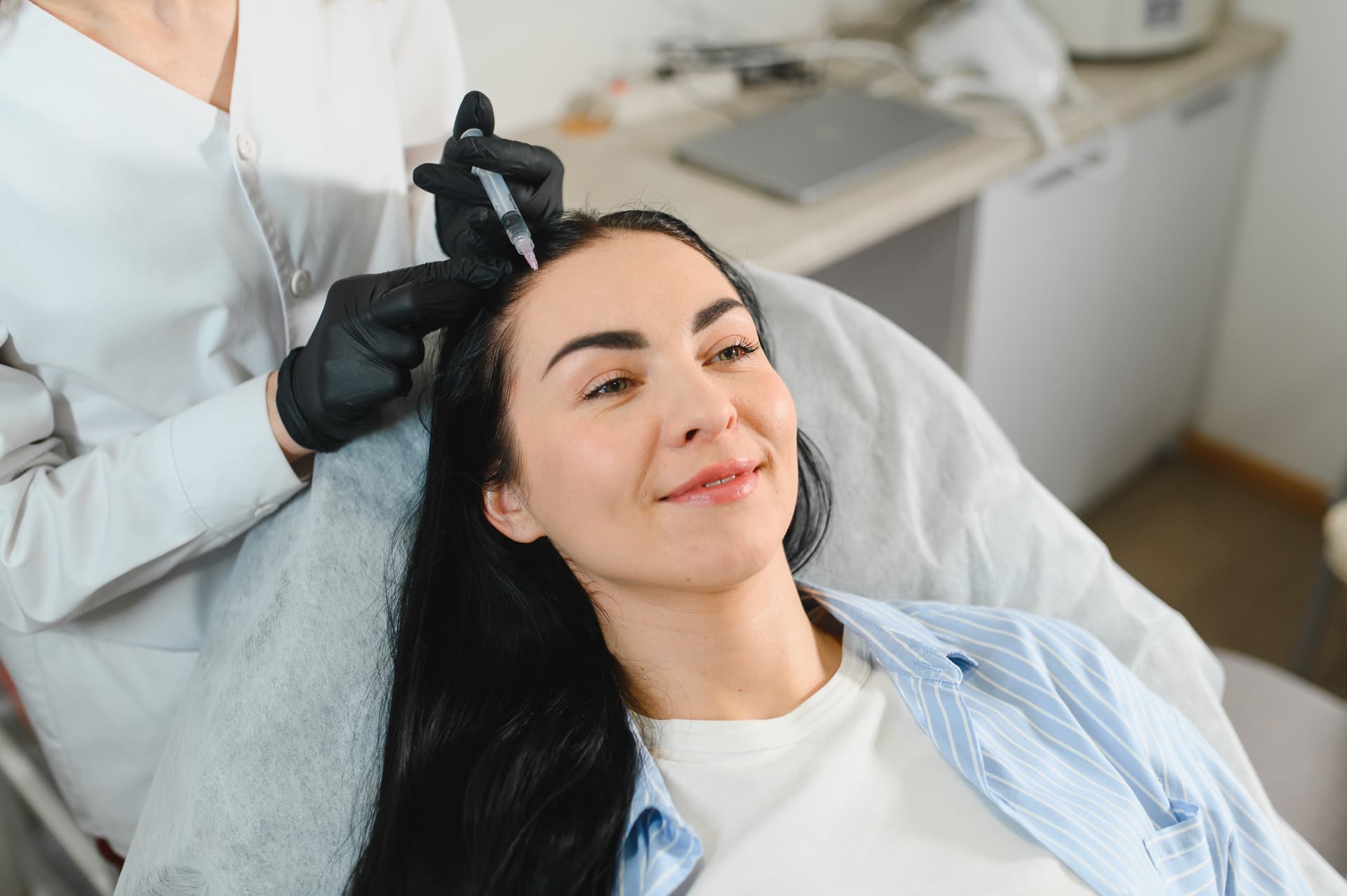
Platelets contain various growth factors and messenger substances. In the body they play an important role in wound healing, the formation of new blood vessels and tissue regeneration. The prepared plasma is injected into the scalp with fine needles — either into areas with existing hair loss or into the treated region after a hair transplant.
As it is the body's own material, allergic reactions to the injected plasma are generally very rare. Typical temporary complaints can be tenderness, redness, slight swelling or small bruises at the injection sites.
How is PRP used with hair transplants?
PRP can be used before, during or after the hair transplant. Possible aims:
- faster healing of redness and wounds
- better conditions for the grafts to heal in
- support for early hair growth
- reducing inflammatory reactions
- supporting existing hair in the treated area
PRP before the procedure
Treatment before the hair transplant is intended to prepare the scalp and put the tissue in the best possible condition for the procedure. PRP can be injected into the donor and recipient areas. The aim is to support local blood flow and the conditions for regeneration.
Such pre-treatment is not necessary for every patient. It can be discussed particularly where the scalp is sensitive, the hair is very fine or there is additional androgenetic alopecia in the untransplanted area.
PRP during the hair transplant
Some clinics use PRP directly during the procedure. The extracted grafts can be brought into contact with a PRP solution. PRP can also be introduced into the recipient region before or after the grafts are implanted.
In theory this approach is intended to protect the sensitive hair roots during the treatment and support their healing in. Local wound healing may also be helped. In practice, however, the methods used differ considerably. You should therefore ask exactly whether PRP is actually applied to the grafts, injected or only used externally.
PRP after the hair transplant
After an FUE or DHI hair transplant, PRP is often offered as a complementary follow-up treatment. The plasma is injected into the recipient region and, if appropriate, into the donor area.
The aim is to promote healing of the small extraction sites and implantation channels, improve local blood flow and support the transplanted follicles during the early growth phase. PRP can also be used to stabilise the growth of existing, untransplanted hair.
What do scientific studies say?
The evidence on PRP for hair loss is basically positive but mixed. A review from 2022 reported that several studies showed an increase in hair density and hair thickness after PRP. At the same time it pointed out that the treatment protocols differ greatly.
Meta-analyses have also come to different conclusions. One analysis did find an increase in the number of hairs in PRP-treated areas but saw no sufficient evidence that PRP is superior to other established therapies. The reasons given included the lack of uniform protocols and follow-up periods that were too short.
A methodologically more demanding review on androgenetic hair loss included eight randomised studies and one cohort study with a total of 291 patients. Several studies showed better hair density or hair count with PRP, but a moderate risk of bias and a high degree of variation between the studies were also found.
There are also encouraging results for combining it with a hair transplant. A systematic review from 2025 evaluated three clinical studies with a total of 217 patients. In all the studies the PRP groups did better than the control groups on parameters such as hair density, follicle survival and the start of hair growth. The authors stress, however, that the number of studies is still limited.
The conclusion: PRP can be a sensible addition, but its effect is not the same in every patient and a particular result cannot be promised.
Recommended treatment schedule
A frequently used schedule comprises three sessions about a month apart. This approach was also described in a meta-analysis as a possible starting schedule, followed by maintenance treatments every three to six months.
In practice, three to six sessions are often recommended depending on the starting situation:
- one treatment before or around the hair transplant,
- further sessions at monthly intervals,
- and if needed additional top-ups after a few months.
A more intensive schedule can be discussed with weaker hair, diffuse hair loss or slow growth. What matters is an individual assessment by the treating doctor. More sessions do not automatically mean a better result.
Before every PRP treatment, clotting disorders, certain blood diseases, acute infections and relevant medication have to be taken into account. Taking blood thinners should also be mentioned openly. Medical advice is particularly important if other therapies such as minoxidil or finasteride are used at the same time.

Costs in Croatia and Slovenia
Prices for PRP treatments depend on the clinic, the preparation technique used, the area treated and what the price includes. In Croatia and Slovenia the costs are roughly €150 to €400 per session, according to the guide values commonly quoted in medical tourism.
With a schedule of three sessions that gives a guide value of about €450 to €1,200. With six sessions the total cost can be roughly €900 to €2,400. These figures are only guide prices and should be confirmed in writing before booking.
Patients should also check whether the PRP treatment is included in a hair transplant package or charged separately. It is also important whether the costs for the preliminary examination, blood sampling, preparation, injection, follow-up check and any top-up are included.
A low price alone says little about quality. More important are the qualification of the treating doctor, hygiene standards, a verifiable PRP preparation process and realistic advice.
Who is PRP useful for?
- Patients who want to support healing after FUE or DHI
- Women (particularly suitable)
- Patients with early hereditary hair loss
- Anyone who also wants to stabilise existing hair
PRP is not suitable as the sole solution for completely bald areas without functioning hair follicles. With scarring alopecia, inflammatory scalp conditions or an unclear cause of hair loss, the underlying condition has to be clarified first.
PRP may improve the conditions for healing and hair growth, but it does not replace a high-quality hair transplant. For patients with high expectations, the most important approach is therefore a combination of realistic advice, careful FUE or DHI planning, consistent aftercare and — where individually sensible — a matching PRP schedule.
Are you interested in a hair transplant or in more information about PRP treatment? Then contact us today!
Interested in treatment?
Get a free consultation now