More and more women are discovering the solution to hair loss (Part 1)
Hair loss in women is a taboo subject — yet it affects millions. While male hair loss is largely accepted socially, women often suffer in silence from thinning hair, sparse patches or a visible scalp. The good news: hair transplants are not only an option for men. More and more women are discovering this permanent, natural solution — and the figures keep rising.
Hair loss in women: a growing problem
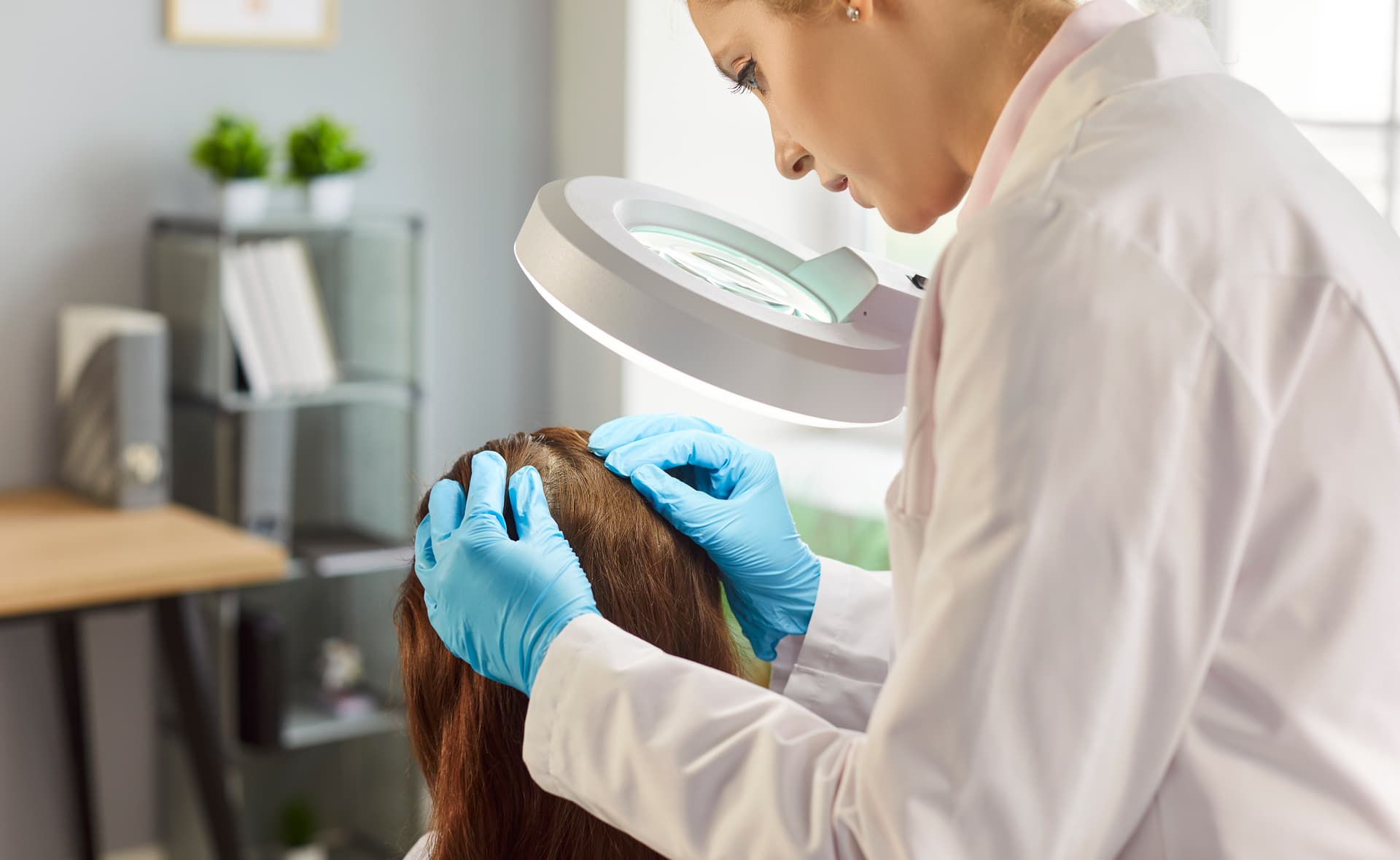
Hair loss is far more widespread among women than many think. Studies show that about 40% of women are affected by hair loss by the age of 70. But unlike men, whose hair loss is often genetic and follows typical patterns (receding temples, baldness), women show different patterns.
Causes of hair loss in women
- Genetic hair loss
- The most common cause in women
- The predisposition is inherited from both parents
- Thin hair becomes increasingly sparse, especially at the parting and the temples
- The hairline is usually preserved (unlike in men)
- Hormonal changes:
- Pregnancy and breastfeeding: after the birth, hair often falls out more heavily (postpartum alopecia)
- Menopause: a lack of oestrogen leads to hair becoming thinner
- The pill or hormone therapy: artificial hormones can trigger hair loss
- Thyroid disorders: an overactive or underactive thyroid affects hair growth
- Stress:
- Telogen effluvium: stress-related hair loss that appears 2–3 months after a stressful event
- caused by chronic stress
- A lack of nutrients: iron, zinc, biotin, vitamin D
- The wrong hair care:
- tight plaits or ponytails (traction alopecia),
- frequent blow-drying, straightening, colouring
- aggressive chemicals in hair care products
- Autoimmune diseases:
- Alopecia areata: patchy hair loss caused by an autoimmune reaction
- Lupus erythematosus: a systemic autoimmune disease with hair loss as a symptom
How hair transplants for women have developed
While hair transplants have been established for men since the 1990s, treatment for women is a relatively new phenomenon.
Figures and trends:
- 2010: about 5–10% of all hair transplants were in women
- 2020: about 15–20% of all hair transplants were in women
- 2024: about 20–25% of all hair transplants were in women
In Germany and Austria about 8,000–12,000 women have hair transplanted every year — an increase of more than 100% in the last 10 years.
Reasons for the increase:
- Less taboo: women talk more openly about hair loss
- Better information: more knowledge about treatment options
- Advances in technique: FUE and DHI allow more natural results in women
- Social pressure: fuller hair is associated with beauty and youth
What is special about hair transplants for women
A hair transplant in women differs from one in men in several respects.
1. Different patterns of distribution
- Men: hair loss concentrates on the forehead, hairline and crown (typical “balding”)
- Women: diffuse hair loss across the whole scalp, particularly at the parting
- The hairline is usually preserved, but the hair becomes thinner overall
2. Denser hair and a finer structure
- Women often have more hair follicles per cm² than men
- The hair is, however, finer and more sensitive
- This calls for particularly precise extraction and implantation of the follicles
3. The donor area
- In women the donor area is often smaller than in men
- The hair at the back of the head is denser, but the available area is more limited
- Several sessions often have to be carried out to achieve the desired result
4. Discretion
- Many women do not want shaving in the donor or recipient area
- Modern methods such as DHI make a transplant without visible shaving possible
- This is particularly important for women who do not want to stand out professionally or socially
Success rates and realistic expectations
A hair transplant in women is a safe procedure with high success rates — but realistic expectations are crucial.
Success rates:
- Follicle survival rate: 90–95% (when carried out correctly)
- Visible growth: after 3–4 months
- The final result: after 12–18 months
- Satisfaction: 85–90% of women are happy with the result
Realistic expectations:
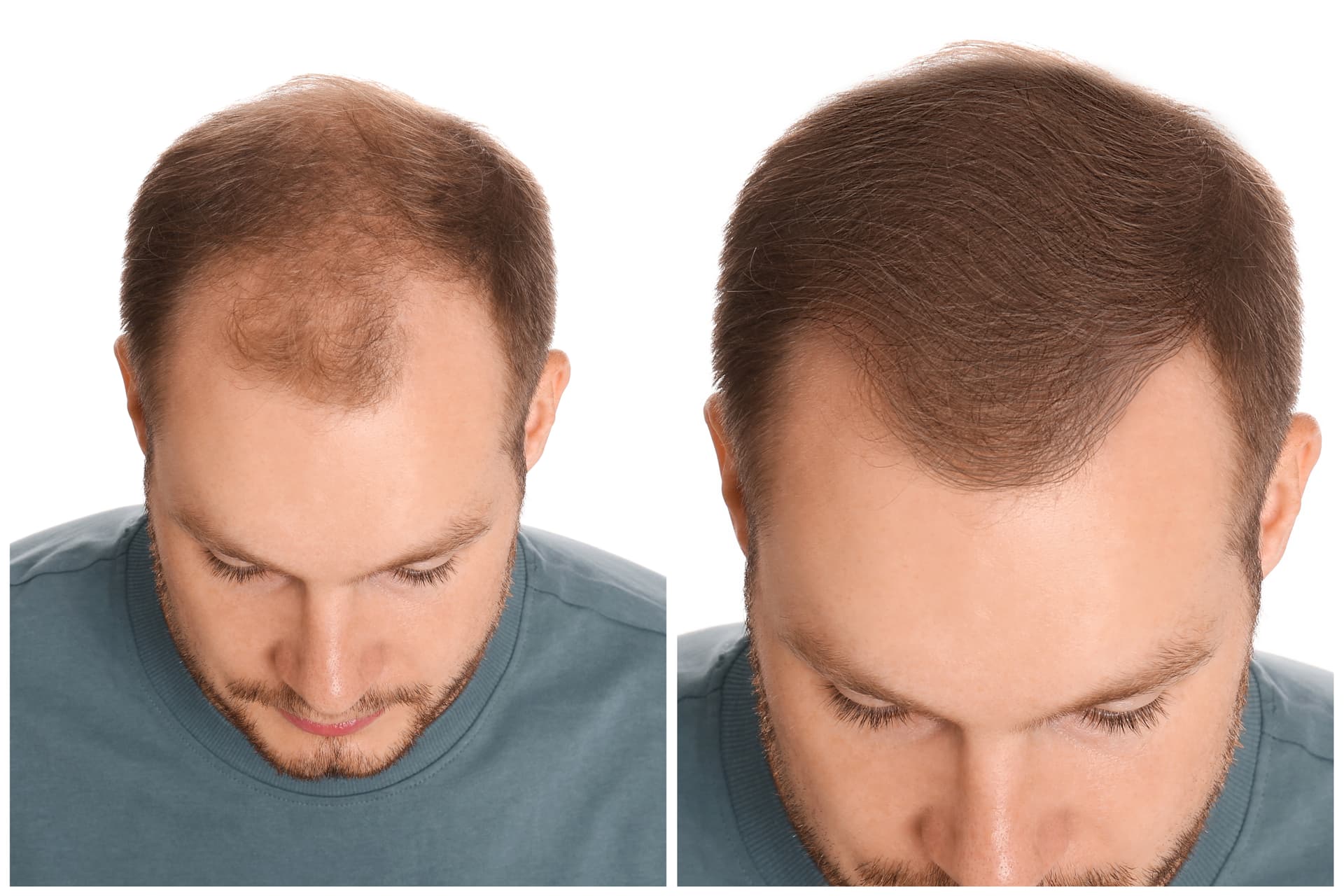
- A hair transplant can thicken existing hair but cannot fully restore the original density
- With very advanced hair loss, several sessions are necessary
- The transplant does not stop further hair loss — accompanying treatments (e.g. minoxidil, PRP) are often necessary
Combining it with PRP for better results
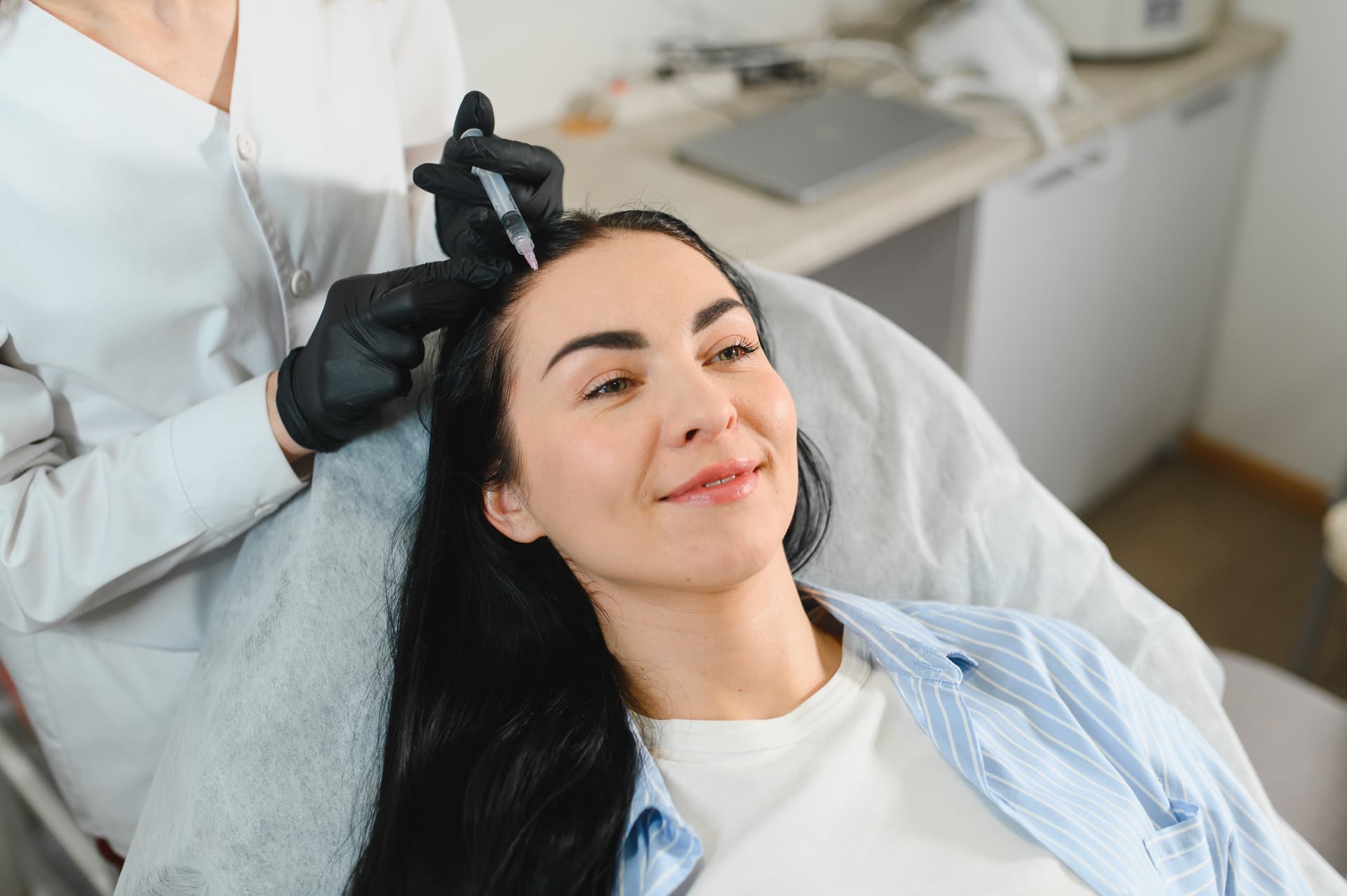
PRP (platelet-rich plasma) is recommended particularly for women, as it speeds up healing and strengthens the existing hair.
What is PRP?
- Your own blood is taken and prepared in a centrifuge
- The plasma is rich in growth factors and stem cells
- It is injected into the scalp to stimulate hair growth
Advantages of PRP:
- Better healing: speeds up recovery after the transplant
- A higher survival rate: the transplanted follicles take better
- Stimulating hair growth: activates dormant hair follicles
- Thickening the existing hair: existing hairs become thicker and stronger
The treatment schedule:
- Before surgery: 1–2 PRP sessions to prepare the scalp
- After surgery: 3–6 PRP sessions at intervals of 4–6 weeks
- Long term: 1–2 sessions a year to maintain the result
Costs:
- Germany/Austria: €150–400 per session
- Croatia/Slovenia: €100–250 per session
Success rates and realistic expectations
- Follicle survival rate: 90–95%
- Visible growth from month 3–4
- The final result after 12–18 months
- 85–90% of women are happy with the result

Case studies of women after a transplant
Case study 1: diffuse hair loss at the parting
Patient: Sarah, 42, office worker
The problem: diffuse hair loss at the parting for 5 years, hormonal (menopause)
The treatment: FUE with 2,500 grafts, combined with 4 PRP sessions
The result: after 12 months visible thickening, the hairline naturally preserved
Satisfaction: “I feel more self-confident again. Nobody notices that I had a transplant.”
Case study 2: thinning temples
Patient: Maria, 35, teacher
The problem: genetic hair loss at the temples, increasingly visible
The treatment: DHI with 1,800 grafts, no shaving in the recipient area
The result: after 10 months full temples, a natural hairline
Satisfaction: “At last I can wear a ponytail again without my scalp showing.”
Case study 3: postpartum alopecia
Patient: Julia, 29, mother
The problem: severe hair loss after the second pregnancy, not reversible
The treatment: FUE with 2,000 grafts, combined with minoxidil and PRP
The result: after 14 months full density, no further hair loss
Satisfaction: “I thought I would have to live with thin hair. The transplant changed my life.”
Hair transplants for women — a discreet, permanent solution
Hair transplants are not just an option for men. More and more women are discovering the advantages of this permanent, natural solution — and the figures keep rising.
With modern methods such as FUE and DHI, combined with PRP for better results, women can get natural, dense hair back — without visible scars and with minimal downtime.
The decision to have a hair transplant is personal — but with sound information, realistic expectations and qualified advice, women can take the step to fuller hair with confidence.
Are you interested in a hair transplant? Then contact us today!
Interested in treatment?
Get a free consultation now