More and more women are discovering the solution to hair loss (Part 2)

Hair loss is often associated with men – yet many women are affected too. Thinning hair, a widening parting or visibly reduced hair density can be a real psychological burden for those affected. At the same time, hair loss in women does not always have the same cause: hormones, genetic predisposition, stress, nutrient deficiencies, thyroid disorders or other factors can all play a role. The good news: depending on the cause, a range of treatment options is available today. These include minoxidil, PRP therapy and – where hair has been permanently lost – hair transplantation.
Why does hair become thinner in women?
Not all hair loss is the same. While some women temporarily lose more hair than usual, others experience gradually increasing thinning over the years.
A particularly common form is so-called Female Pattern Hair Loss (FPHL), i.e. hair loss in women following a typical pattern. Hair density decreases especially along the central parting and on the top of the head, while the front hairline often remains relatively well preserved.
With this form of hair loss, the hair follicles shrink over time. As a result, the hairs become finer and grow shorter. Those affected often first get the impression that their hair is simply getting “thinner and thinner”.
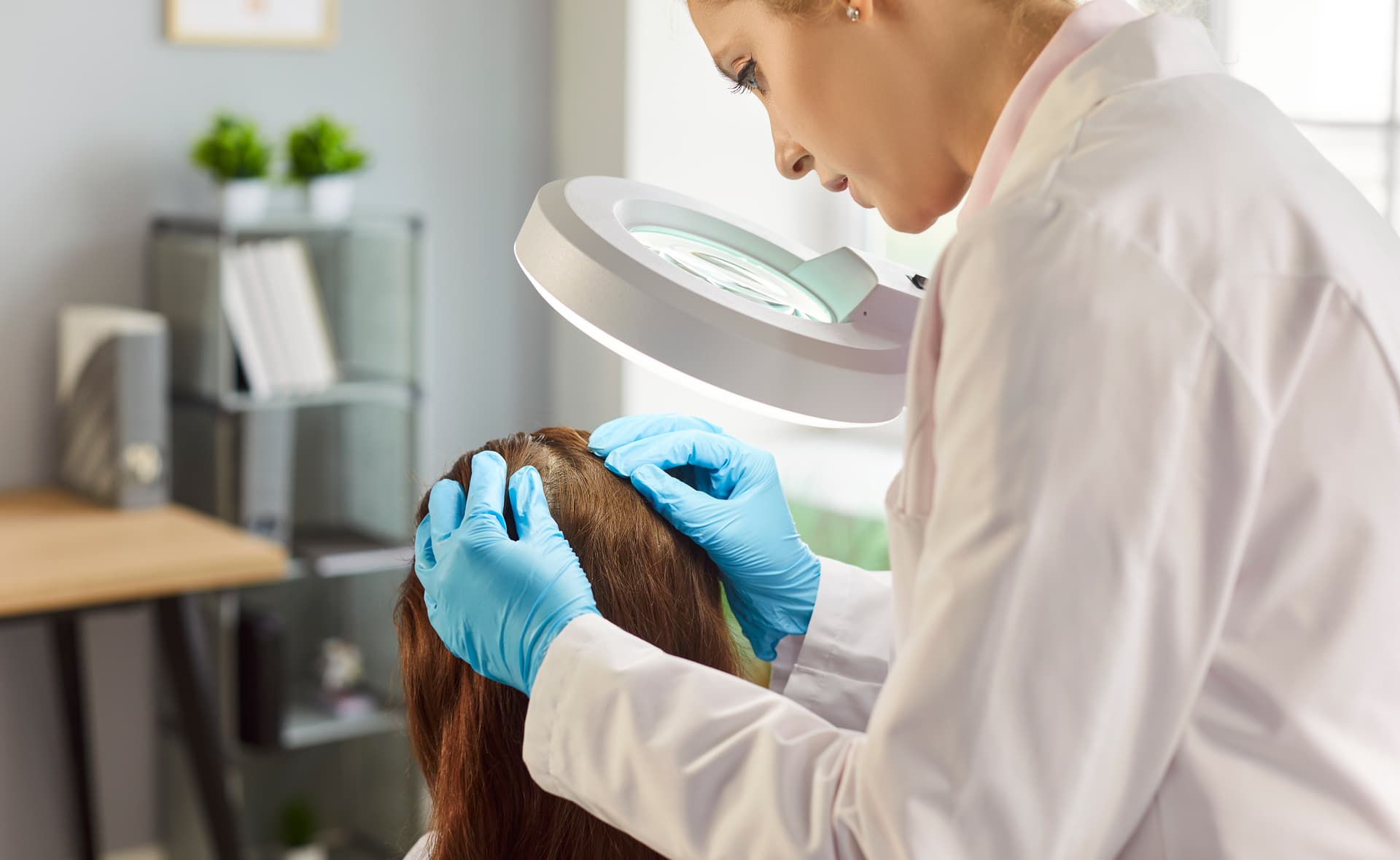
There are also numerous other causes, such as hormonal changes, certain illnesses, stress or deficiencies. This is why new or worsening hair loss should first be assessed by a doctor.
Thin hair or hair loss – what is the difference?
Thin hair does not automatically mean that hair follicles have been permanently lost.
In some women, it is mainly the diameter of the individual hairs that decreases, while the number of existing follicles may still be relatively high. In such cases, measures that support the existing follicles can be helpful.
If, on the other hand, certain areas have already become permanently bald, a different strategy may be needed.
This is an important distinction:
- Thin, weakened hair → strengthen existing follicles
- Permanently bald areas → possibly hair transplantation
In practice, both situations can also occur at the same time.
Minoxidil: one of the most important conservative treatment options
Minoxidil is one of the best-studied active ingredients for female hair loss. Studies and reviews show that topical minoxidil can improve hair density in Female Pattern Hair Loss. A Cochrane review, for example, found an advantage of minoxidil over placebo in self-assessed hair regrowth.
How does minoxidil work?
Minoxidil is applied directly to the scalp. The active ingredient influences the hair cycle and can in particular support the growth phase of the hair. The aim is to keep miniaturised hair follicles active for as long as possible and to make existing hair look stronger again.
However, minoxidil is not an instant remedy. A visible improvement usually takes several months. In addition, the treatment has to be continued long term if the results achieved are to be maintained.
Possible side effects include skin irritation or unwanted hair growth outside the scalp. Medical advice should therefore be followed when using it.
Important: minoxidil should not be used during pregnancy or breastfeeding. Oral minoxidil should also never be started on your own initiative – it belongs in the hands of a doctor. A recent international expert consensus also addresses the controlled use of low-dose oral minoxidil in women.
PRP for hair loss: what is behind it?
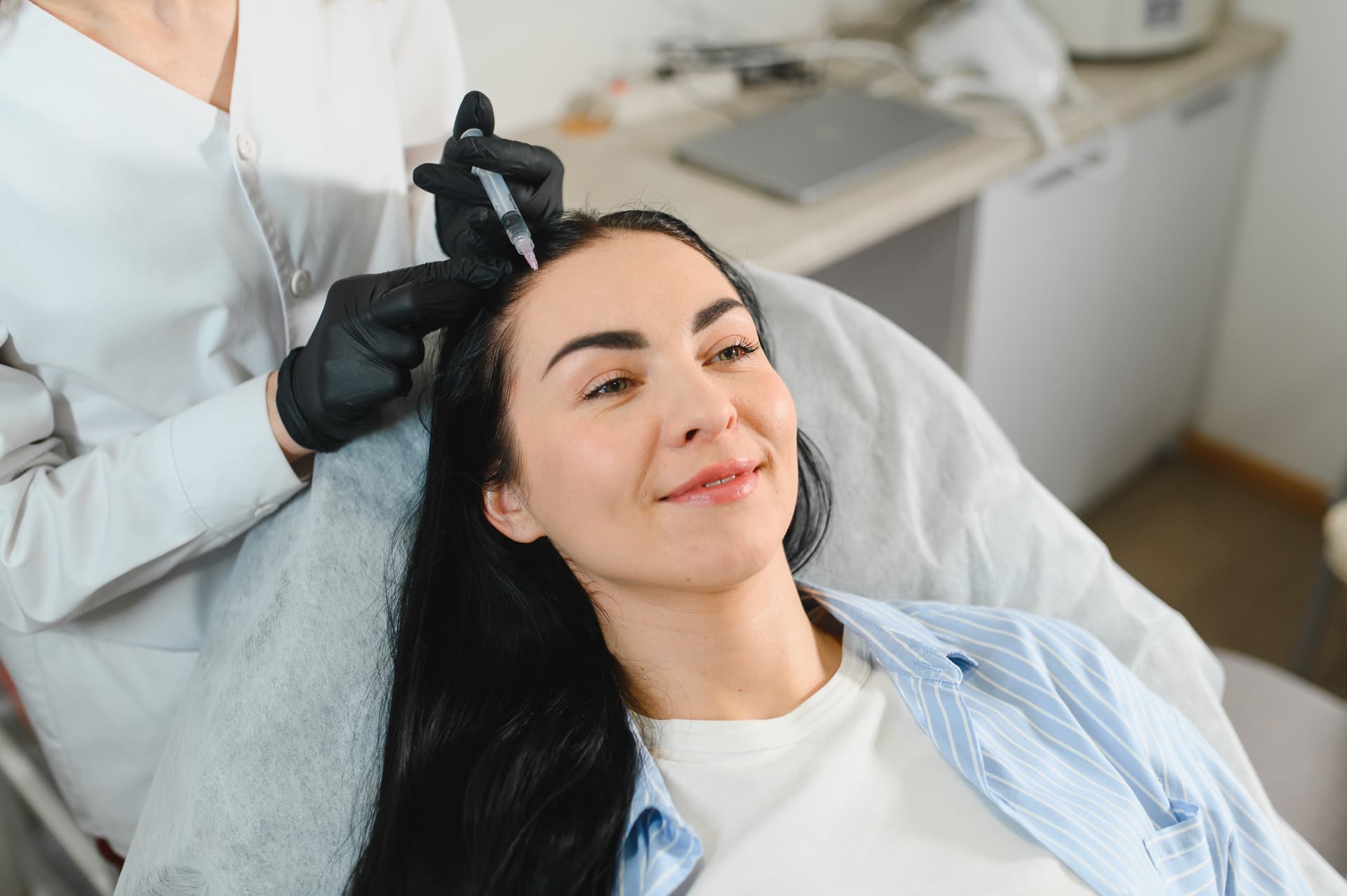
Another treatment option is PRP therapy (platelet-rich plasma).
First, a small amount of blood is taken from the patient. The blood is then processed to obtain a platelet-rich plasma fraction, which is subsequently injected into the scalp in a targeted way.
The idea behind it: the platelets contained in PRP release various growth factors that can influence the environment of the hair follicles.
PRP is therefore of particular interest when hair follicles are still present but weakened.
What do scientific studies say?
Research on PRP is promising, but not yet as conclusive as that on minoxidil.
A recent randomised study in women with Female Pattern Hair Loss compared PRP with other autologous platelet preparations. After 24 weeks, hair density improved in all groups studied; however, some of the other preparations outperformed classic PRP in this study.
A 2024 systematic review also examined the combination of PRP and minoxidil. Overall, the included studies showed better results for the combination than for minoxidil alone. At the same time, the authors rated the evidence as only low to very low because of small studies, differing PRP procedures and in some cases a high risk of bias.
In other words: PRP can be a worthwhile treatment option, but it should not be presented as a miracle cure.
What are the advantages of PRP?
- The patient’s own blood is used.
- It is a minimally invasive treatment.
- The treatment can be useful for weakened hair follicles that are still present.
- PRP can be combined with other therapies.
- The treatment can also be used alongside a hair transplant.
What are the disadvantages?
- Several sessions may be necessary.
- The treatment is not suitable for every form of hair loss.
- The scientific evidence is still inconsistent.
- Results vary from patient to patient.
- PRP cannot simply bring back permanently lost hair follicles.
This is precisely why a prior examination of the scalp is important.
Experiences with PRP: what do patients report?
Patient reports on PRP are often positive – especially when it comes to less hair shedding, stronger-looking hair and better visible hair density.
However, such personal experiences are not the same as scientific studies. A successful treatment in one patient does not automatically mean that the same effect can be expected in every other patient.
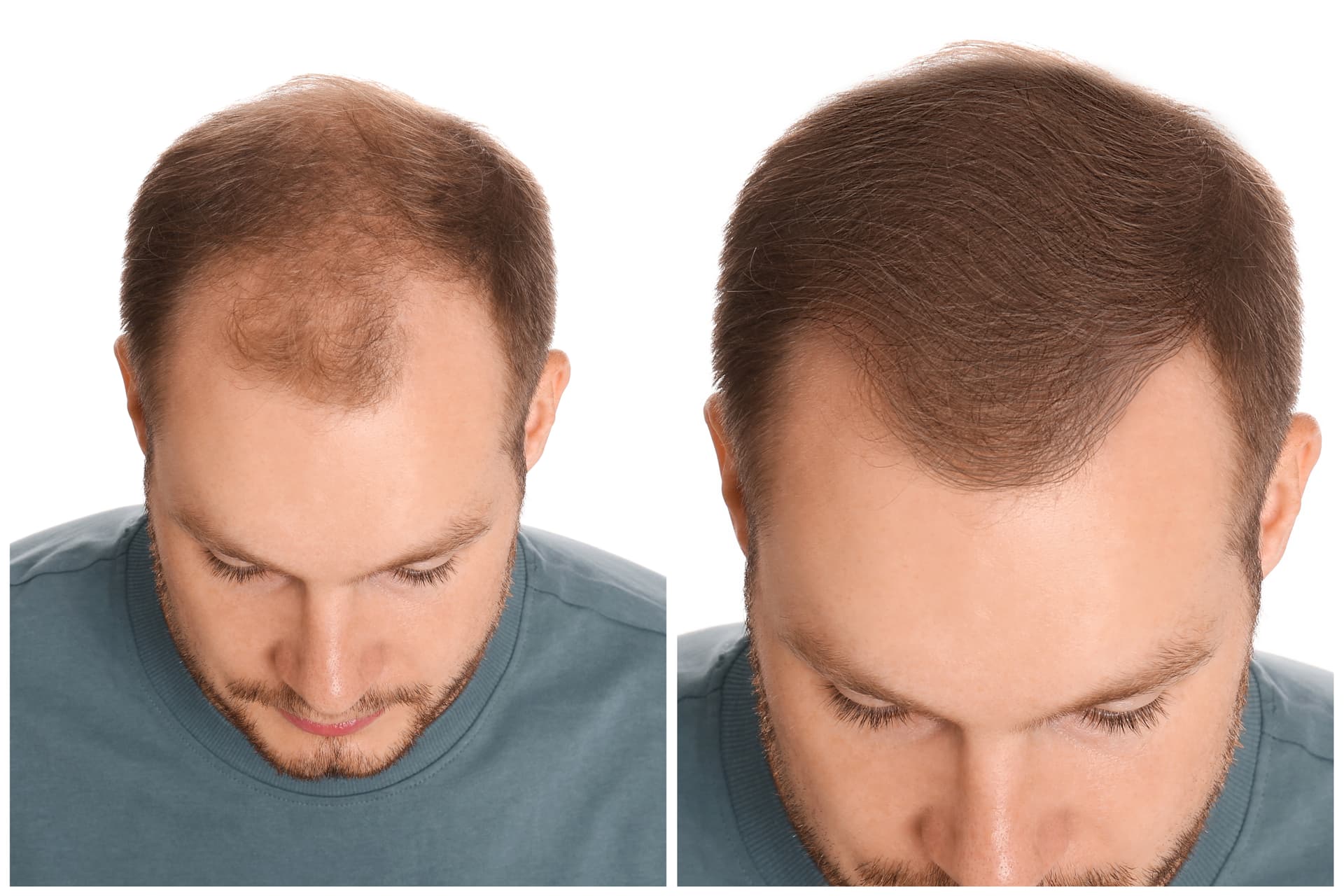
Specialised clinics also document their results with before/after photos in some cases and track changes over several treatments. Poliklinika Maletić, for example, describes a gradual improvement in hair quality and visible hair density after PRP treatments and recommends an individual assessment of the scalp before therapy.
From the patient’s point of view, this is crucial: the starting point should not be the therapy, but the diagnosis.
When is a hair transplant an option for women?
A hair transplant can be worth considering when hair has been permanently lost in certain areas and sufficient regrowth can no longer be expected there.
In an FUE hair transplant, individual follicular units are taken from a suitable donor area and implanted into the thinned or bald areas.
In women, however, the situation is often more complex than in men.
With diffuse hair loss, the donor area may also be affected. This is why a thorough examination is particularly important.
A hair transplant should therefore not automatically be the first treatment. Rather, it can be appropriate when:
- the cause of the hair loss is known,
- the hair loss has been sufficiently stabilised,
- there is enough suitable donor hair,
- certain areas are permanently thinned or bald,
- and expectations of the result are realistic.
FUE hair transplant: a modern method for permanent hair restoration
In the FUE method (Follicular Unit Extraction), individual follicular units are taken from the donor area and then implanted into the recipient area.
One advantage of the method is that no elongated strip of skin has to be removed. Instead, the follicles are extracted individually.
Poliklinika Nova in Split offers FUE hair transplants and describes the method as a minimally invasive procedure under local anaesthesia. The clinic is run by dermatologist Dr. Vana Kljaković Gašpić, who specialises in scalp disorders and hair transplantation. According to the clinic, more than 1,000 hair transplants have already been performed.
Poliklinika Maletić in Zagreb also offers FUE and additionally performs DHI, Sapphire and STRIP/FUT procedures. According to the clinic, which method is suitable depends on the individual starting situation and the desired result.
PRP and hair transplantation – can the two be combined?
Yes. In certain cases, the combination can be beneficial.
The basic idea is simple:
- Hair transplant = replace permanently missing hair
- PRP = support existing hair and the environment of the hair follicles
Poliklinika Maletić, for example, also uses PRP in connection with hair transplants and describes its use to support regeneration after the procedure and to strengthen existing hair.
Whether such a combination actually makes sense, however, has to be decided on an individual basis.
What can be done about thin hair?
With thin hair, the first step should be to find out why it has become thin.
Depending on the cause, different measures can be helpful:
1. Rule out medical causes
With pronounced or newly occurring hair loss, hormonal factors, iron deficiency, thyroid disorders or other causes may play a role. A medical examination can help identify treatable causes.
2. Support existing hair
For Female Pattern Hair Loss, topical minoxidil is one of the best-studied treatment options and is still considered an important first-line therapy.
3. Consider PRP
If there are still enough active but weakened follicles, PRP treatment can be an additional option.
4. Optimise hair care
Harsh chemical treatments, frequent intense heat styling or very tight hairstyles can put additional strain on the hair fibre. Gentle hair care cannot eliminate the cause of genetic hair loss, but it can help reduce breakage and additional stress on the hair.
5. Discuss a transplant if hair loss is permanent
If certain areas have become permanently bald, a hair transplant may be an option.
How can GO Medics help?
For patients from Austria and Germany, finding a suitable specialised hair clinic abroad can seem complicated at first.
- Which treatment actually makes sense?
- Is minoxidil enough?
- Is PRP worthwhile?
- Or would a hair transplant be the better solution?
- And which clinic has the relevant experience?
This is exactly where GO Medics comes in.
As an agency for medical treatments in Croatia, GO Medics supports patients in choosing suitable treatment partners and in organising the treatment process.
For hair treatments, GO Medics works with specialised partners including Poliklinika Maletić in Zagreb and Poliklinika Nova in Split .
In addition to hair transplants, Maletić offers PRP, laser treatments to stimulate growth, scalp mesotherapy and other regenerative procedures. The clinic also offers trichoscopic scalp diagnostics.
At Poliklinika Nova, the focus is on dermatology, trichology and FUE hair transplantation.
Depending on the starting situation, different treatment paths may therefore be considered:
Thin, weakened hair
→ Diagnostics
→ Conservative treatment
→ Possibly PRP
Progressive hair loss
→ Medical assessment
→ Stabilising the hair loss
→ If appropriate, PRP or further therapy
Permanently bald areas
→ Assessment of suitability for a hair transplant
→ FUE or another suitable method
Diffuse thinning + permanently missing areas
→ Possibly a combination of different treatment options
Conclusion: hair loss does not simply have to be accepted
Hair loss in women can have many causes and should therefore not be regarded as a purely cosmetic problem.
Minoxidil is one of the best-studied treatment options for female pattern hair loss. PRP can be an interesting complement, particularly when weakened hair follicles are still present – although the scientific evidence is not yet conclusive. A hair transplant, on the other hand, is mainly an option when hair has been permanently lost and there is enough suitable donor hair.
What matters, therefore, is an individual treatment plan rather than a one-size-fits-all solution.
Anyone interested in treatment in Croatia can first find out through GO Medics which options are suitable for their particular situation. Together with specialised partner clinics such as Poliklinika Maletić in Zagreb and Poliklinika Nova in Split, it can then be assessed whether PRP treatment, another regenerative therapy or a hair transplant makes sense.
After all, the goal should not simply be “more hair” – but a treatment that matches the individual cause of the hair loss.
Note: This article is for general information only and does not replace a medical examination or individual medical advice. Especially in the case of sudden, severe or unexplained hair loss, a dermatological or medical assessment should be carried out first.
GO Medics helps patients find suitable medical treatment options and, on request, organises treatment at specialised partner clinics in Croatia.
Interested in treatment?
Get a free consultation now