Hair transplants: 6 myths and facts — what you really should know
The article describes the most common myths and the most important facts about hair transplants.
Myth 1: “Hair transplants are only for men”
The truth: women benefit from hair transplants too.
It is true that men are affected by hair loss more often — about 80% of men show signs of hair loss by the age of 70. But women suffer from hair loss too: about 40% of women are affected by the age of 70.
Causes of hair loss in women:
- Genetic hair loss (androgenetic alopecia)
- Hormonal changes (pregnancy, menopause, the pill)
- Stress and psychological strain
- Iron deficiency or thyroid disorders
- The wrong hair care (blow-drying and colouring too often, tight plaits)
What is special in women:
- Women usually lose hair diffusely across the whole scalp, not only in particular places as men do.
- The hairline is often preserved, but the hair becomes thinner overall.
- Women often have denser hair, which makes the transplant easier.
Conclusion: hair transplants are suitable for both sexes. With women the treatment does call for a different approach, but the success rates are just as high as with men.
Myth 2: “The results look artificial”
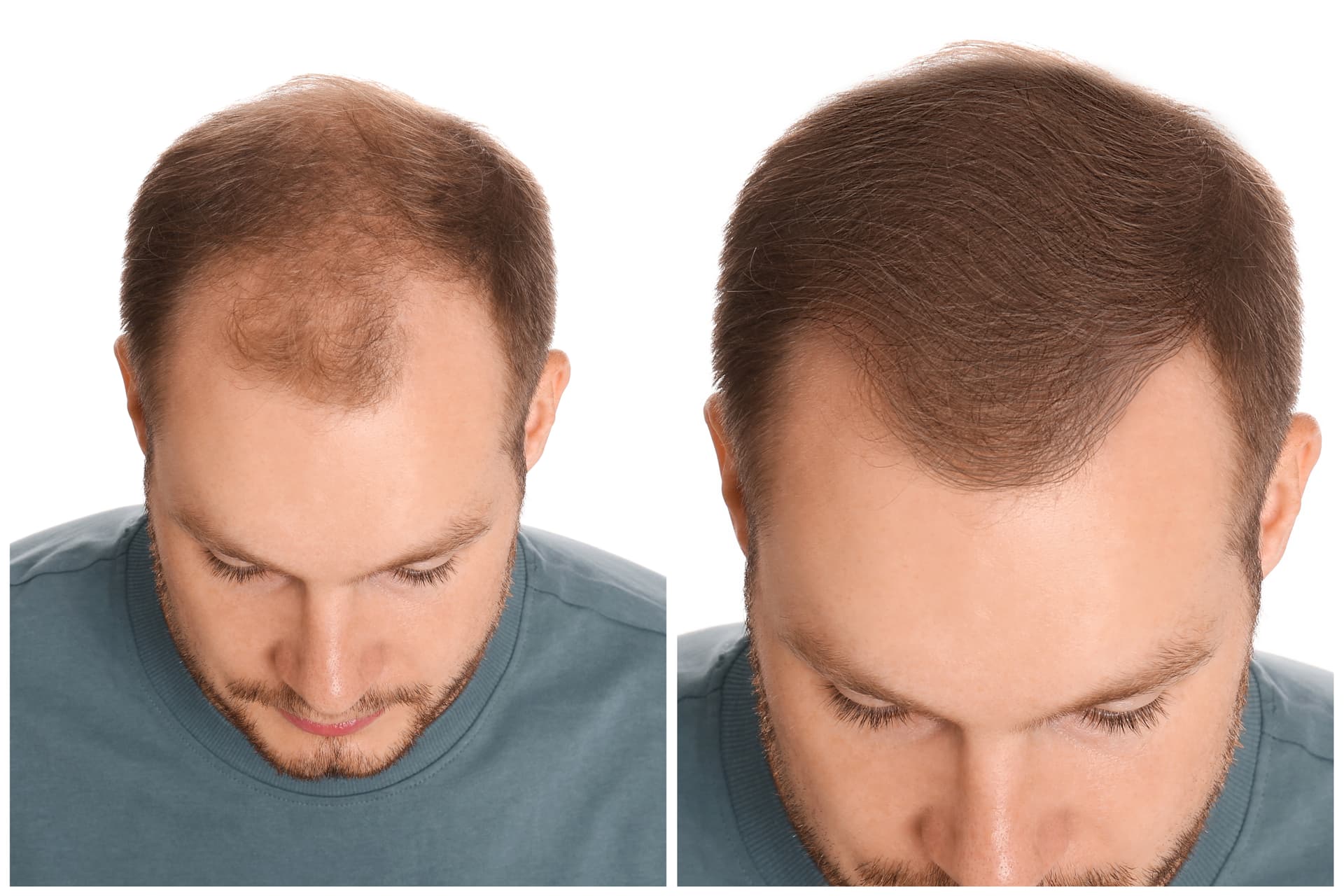
The truth: modern methods look natural and inconspicuous
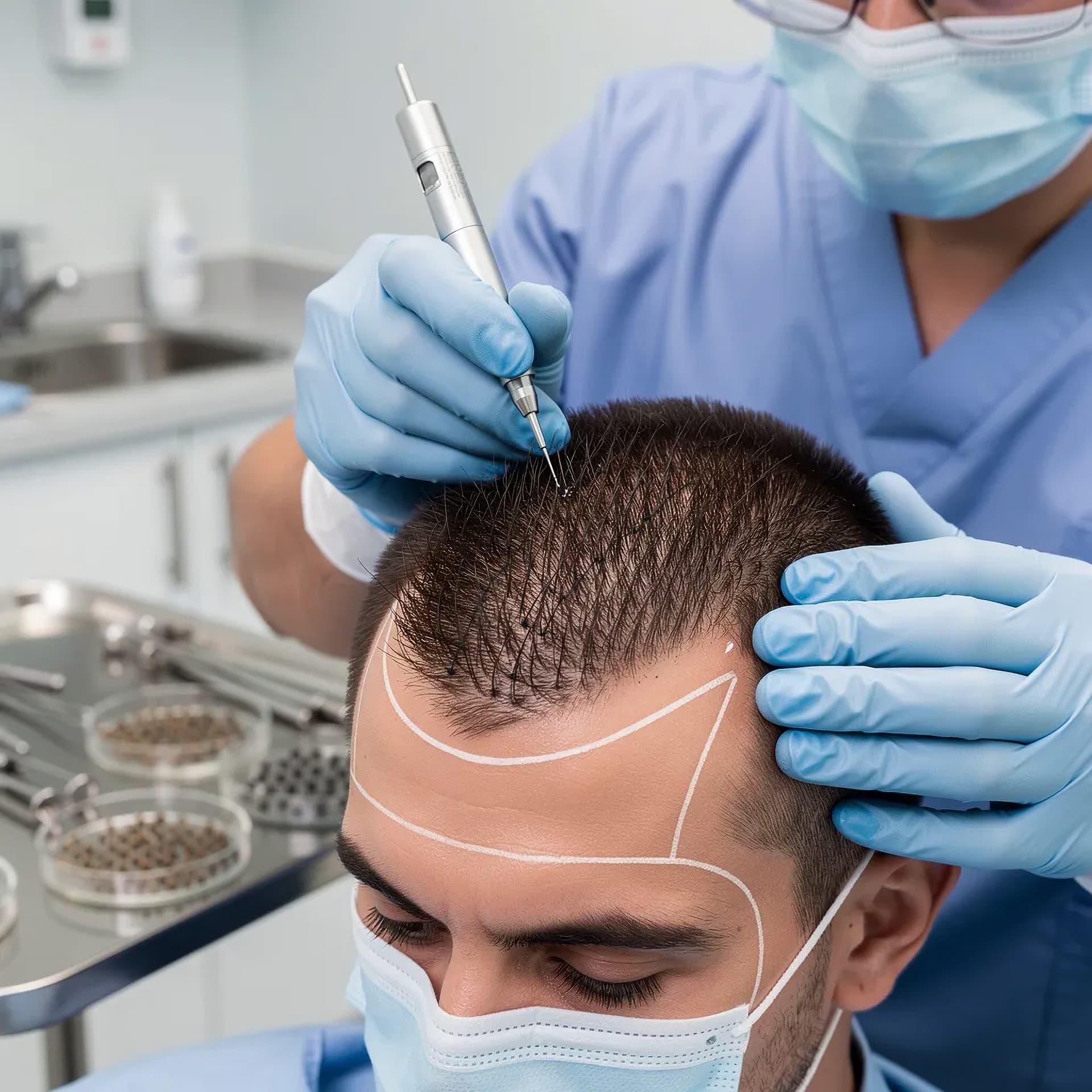
This myth dates from the 1980s, when large islands of hair were transplanted. Modern methods such as FUE and DHI place individual hair follicles in the natural direction of growth — the result is indistinguishable from natural hair.
Modern methods such as FUE and DHI:
- FUE (Follicular Unit Extraction): individual hair follicles are extracted and placed in natural units (1–4 hairs per follicle).
- DHI (Direct Hair Implantation): the hairs are placed directly into the scalp with a special implanter, which allows more precise positioning.
Natural results thanks to:
- Taking the natural direction of hair growth into account
- Varying the hair angles for a natural appearance
- A distribution of density that matches natural hair growth
- Using single-hair and multi-hair follicles in the right places
Conclusion: with a professionally performed hair transplant the result is indistinguishable from natural hair. Even hairdressers or close friends often do not notice the difference.
Myth 3: “A hair transplant is painful”
The truth: a local anaesthetic keeps pain to a minimum
Fear of pain is one of the most common reasons why people put off a hair transplant. But the reality is different.
What patients feel during the operation:
- A local anaesthetic: the scalp is numbed with local anaesthetics (similar to at the dentist).
- During the operation: patients are awake but feel no pain — only slight pressure or pulling.
- Duration: 6–8 hours, during which patients can relax, listen to music or watch films.
After the operation:
- The first 24–48 hours: a slight feeling of tightness or pressure on the head.
- Painkillers: in most cases mild painkillers such as paracetamol or ibuprofen are enough.
- Sleeping position: lying on your back is recommended to avoid pressure on the scalp.
Conclusion: most patients report that the hair transplant was less painful than expected — often less painful than a visit to the dentist.
Myth 4: “The hair falls out again”
The truth: transplanted hair is permanent.
This myth often arises from misunderstandings about the natural hair growth cycle.
What happens after the transplant:
- Weeks 2–4: the transplanted hairs fall out — this is normal and part of the healing process.
- Months 2–4: new hairs begin to grow.
- Months 5–9: visible hair growth, about 50–70% of the final density.
- Months 12–18: the final result with 100% of the transplanted hairs.
Why transplanted hair is permanent:
- The hairs are taken from the “safe zone” at the back of the head, which is genetically not affected by hair loss.
- These hairs keep their characteristics after the transplant too.
- They follow the natural growth cycle but do not fall out permanently.
Important: the existing, non-transplanted hairs can continue to fall out. Doctors therefore often recommend an accompanying treatment with minoxidil or finasteride to stop further hair loss.
Conclusion: transplanted hair is permanent and does not fall out again. It grows for a lifetime like normal hair.
Myth 5: “Only rich people can afford it”
The truth: options abroad make hair transplants affordable
Hair transplants really were once an expensive treatment reserved for the wealthy. Today, however, there are many affordable options.
A cost comparison:
Country & cost for a typical transplant (2,000–3,000 grafts)
Germany €4,000 – 8,000
Austria €4,500 – 9,000
Croatia €2,000 – 4,000
Slovenia €2,500 – 4,500
Saving: 40–60% compared with Germany and Austria
Why is it cheaper abroad?
- Lower operating costs (rent, staff, taxes)
- More efficient structures in specialised clinics
- Competitive pressure in the hair tourism sector
What is included in the price?
- A free first consultation (often online)
- Hair analysis and surgical planning
- The operation under local anaesthetic
- Medication and care products for the first few days
- Aftercare and check-ups
Conclusion: hair transplants are affordable for many people today, particularly thanks to the option of having the treatment carried out abroad.
More on this in our guide to Croatia.
Myth 6: “You have to hide away for months”
The truth: most patients are presentable again after 10–14 days.
Many people fear that after a hair transplant they will not be able to go outside for weeks. But the reality is different.
How healing progresses:
- Days 1–3: slight redness and swelling in the recipient and donor areas
- Days 4–7: crusts form and gradually heal. The redness subsides
- Days 8–10: the crusts fall off, the first hairs may be visible
- Days 11–14: most patients are presentable again. Slight redness can be concealed with hair products or simple hairstyles
- Weeks 3–4: the scalp has healed completely, normal hair care is possible
Tips for the first few days:
- Loose hats or caps can be worn from day 3
- Avoid direct sunlight for 4 weeks
- No sport, swimming or sauna for 2–3 weeks
- Gentle hair washing from day 2–3 following the clinic's instructions
Conclusion: most patients can work and take part in social activities again after just 10–14 days. There is no need for a months-long “hiding phase”.
Hair transplants — safe, natural and affordable
The 6 myths about hair transplants show that many false ideas about the procedure persist. The reality is different:
- Suitable for both sexes
- Natural, inconspicuous results
- Minimal pain thanks to local anaesthetic
- Permanent results
- Affordable thanks to options abroad
- Quick healing and a quick return to social life
If you suffer from hair loss and are considering a hair transplant, do not let myths put you off. Get information from qualified doctors and clinics — and discover how a hair transplant can improve your self-confidence and your quality of life.
Are you interested in a hair transplant? Then contact us today!
Interested in treatment?
Get a free consultation now